Headlines
How to Write Hooks
A hook is the first meaningful moment that gives someone a reason to attend to your message. Choose a detail relevant to the audience's situation and fit it to what they actually encounter. Write the continuation alongside it, then check whether the next moment develops the expectation you created.
By the end of this lesson
Write a relevant hook and continuation for a specific encounter, then review the promise in its actual format.

At her workshop table, Perpetua opens a test email on her phone. The preview says "Having trouble viewing this message?" Beside it lies a green cotton shirt with a hole near the elbow, the repair she meant readers to see first.
Perpetua and her business, Larkspindle Mending, are invented. In this example, she teaches beginners to patch a small worn area in a cotton garment, with practice materials supplied.
She opens the draft again. Before changing the wording, she needs to decide what belongs in the space the inbox actually shows.
Choose the moment you are trying to earn
Perpetua is writing to subscribers who want workshop news. They can see a subject line and a short preview before deciding whether to open the email.
A stranger who comes across a demonstration video is in a different spot. They need enough context to work out what's happening at all, so one opening can't serve every encounter.
Perpetua writes "subscriber inbox" above the draft and reads the subject beside the preview. If the subject says "Beginner mending workshop," the preview can introduce the shirt straight away; it doesn't need to announce the business again.
Nielsen Norman Group's information-scent guidance describes how link labels and surrounding cues help people decide where to go next. I'd apply that inspection to an email opening too: read the subject and preview together.
For a paid placement, the ad-hooks lesson covers the setting and testing. Perpetua's subscribers asked for her emails, so she can write a quieter invitation.
Three hypothetical first encounters
- 1. Class listing
- 2. Subscriber email
- 3. Demonstration
Class listing
Can I do this as a beginner?
Friction: The description sounds advanced.
Opportunity: Show one attainable patch and name the beginner workshop.
Subscriber email
What are we making this month?
Friction: A long greeting hides the project.
Opportunity: Put the garment and patch near the start.
Demonstration
What am I looking at?
Friction: An unexplained close-up has no context.
Opportunity: Show the hole and patch together before explaining the stitch.
Find a detail the audience can recognize
The hole in the shirt gives Perpetua a starting point. It's small enough to match the practice task and familiar enough to show without an explanation of her business philosophy.
For a real offer, look through your research for a relevant situation. Keep customer wording with its source, and use voice of customer research if you need to gather that material.
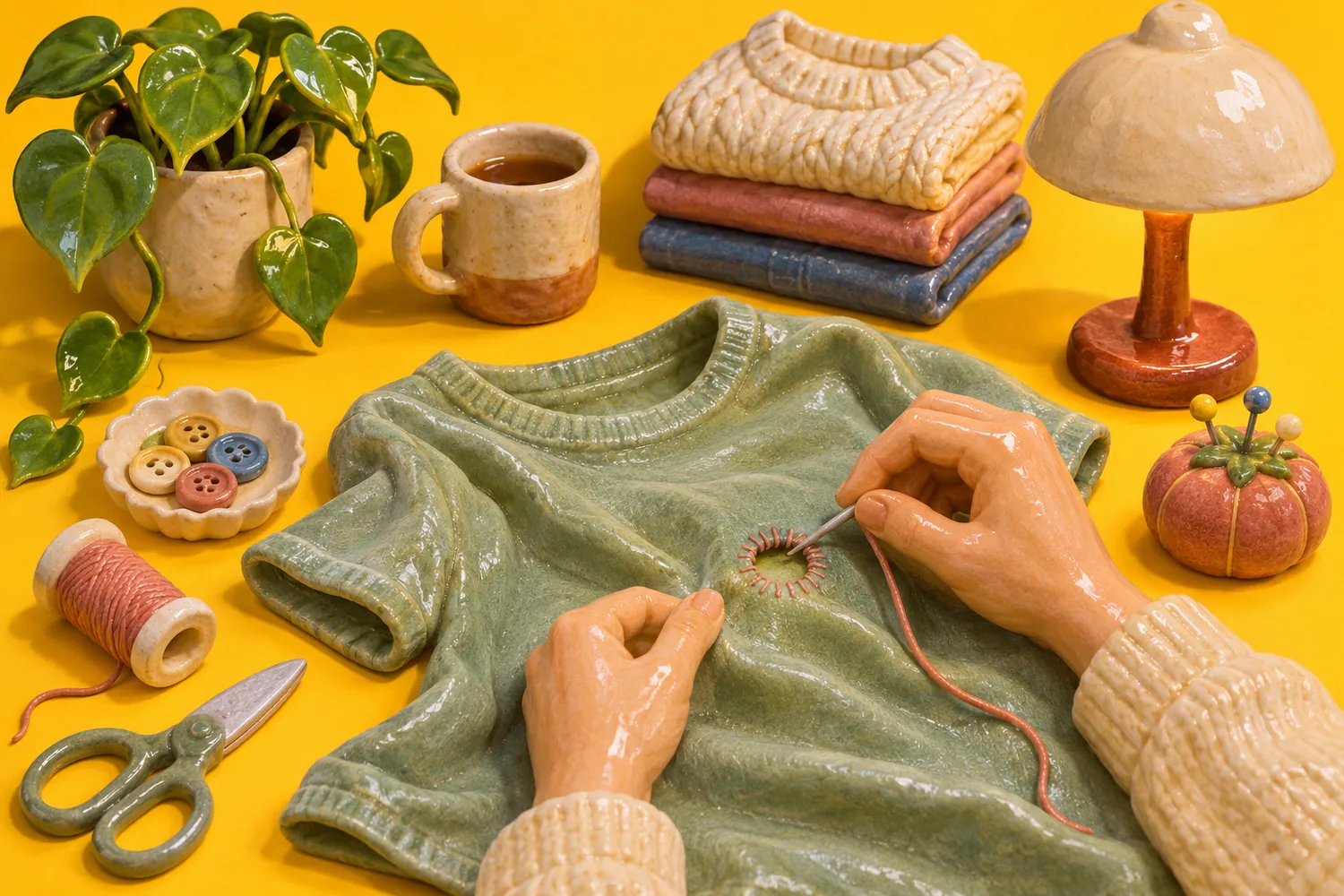
Perpetua's shirt can suggest one repair a beginner could practice. "Save any garment" would extend the invitation to damage and fabrics her class doesn't cover.
You can also start with something the reader wants to try. A contrasting patch on a plain shirt could introduce the project without asking people to feel bad about their sewing skills.
Make one promise, then supply the next beat
Perpetua drafts "Your first patch can be visible." She follows it with an invitation to bring a cotton garment and practice one patch using the supplied materials.
That continuation lets a reader judge whether the workshop fits. If she followed the patch with a broad statement about fashion's future, readers would still be waiting to find out what they'd do in class.
Draft the continuation while the opening is still provisional. Check what someone would expect next and where you begin answering that expectation.
For other approaches, try the ten hook types. Choose one that fits the material you already have and the offer you're able to deliver.
Let the format do part of the work
Back in the email draft, Perpetua moves the view-in-browser link lower. She puts the shirt invitation in the preview position, then prepares another test to see what the inbox will display.
The subject "Beginner mending workshop" and preview "That shirt with the small hole can be your practice piece" now share the work. One identifies the class; the other gives a subscriber something to bring.
She keeps "Bring a cotton garment" at the start of the opened email. The preview gives the invitation; this next line tells subscribers which fabric the class covers before they look for booking details.
Check what the hook caused people to expect
Show the opening in its intended setting to someone who could take the class. Ask what they think they'll do and what they expect to find next.
Perpetua needs to learn whether they expect to practice a patch themselves or have her repair the shirt for them. If someone expects a repair service, she can revise the continuation to "Bring your cotton garment and practice a patch with us," then check that version with another reader.
Then show what follows. Check whether it answers their question before another introduction delays the class details.
A practical hook review
Encounter
Inspect what a reader or viewer actually sees or hears first.
Expectation
Ask what the opening appears to promise, before explaining your intention.
Continuation
Check whether the next beat answers the question or develops the possibility.
Fit
Confirm that the people attracted are plausible readers or buyers for the offer.
If you test behavior, decide what outcome matters beyond noticing the opening. For a paid social placement, Facebook and Instagram ad copy helps you review the ad with its destination.
A more sensational line may draw viewers who are poor matches for the offer, so a higher view count can hide a weaker result.
Adapt the invitation for a demonstration
For a spoken demonstration, Perpetua could begin with "Let's patch the hole in this shirt" while holding up the garment. The viewer can connect the words to the object before she introduces the technique.
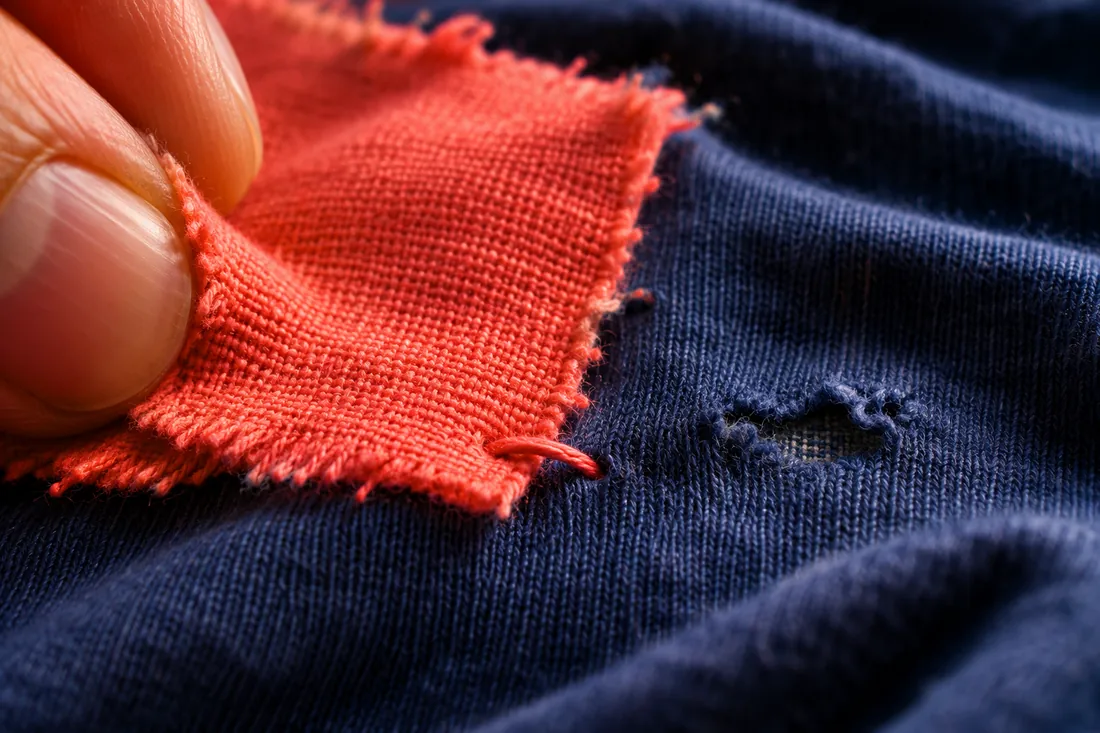

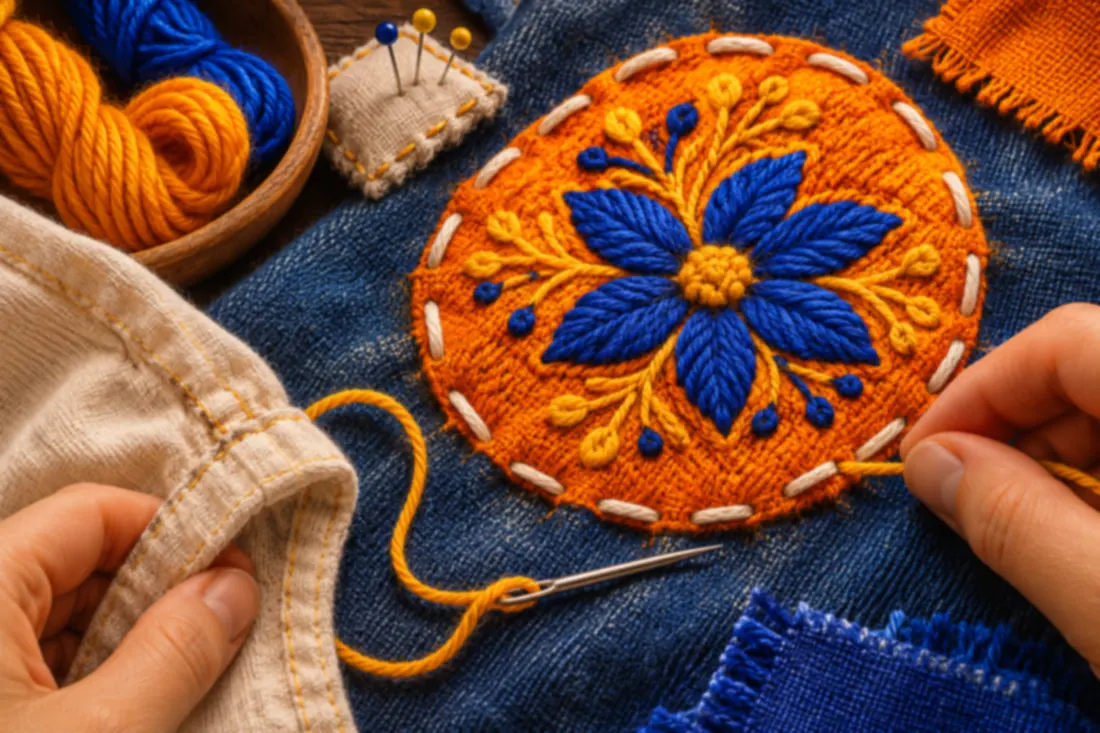

Use the camera preview to inspect the framing.
Prepare the demonstration before recording
Place the garment where the worn area is visible. Rehearse holding it up while introducing the project, then check whether your hands hide the spot you want the viewer to notice.
This prompt helps you rehearse an opening for the invented mending workshop.
For a visual opening, show enough of the shirt to locate the worn area. Keep explanatory text available so understanding the workshop doesn't depend on spotting a small detail in the image.
Hypothetical hook-and-continuation pairs
Recognizable situation
That shirt with the small hole can be your practice piece. Bring a cotton garment and learn one visible patch.
The continuation turns a familiar object into a concrete workshop task.
Demonstration
Show a worn patch of fabric beside the finished repair. Say: This is the patch we'll practice in the beginner class.
The image supplies the result while the words identify the offer.
Permission to begin
Your patch doesn't have to disappear. We'll use contrasting fabric so you can see each stitch as you learn.
The opening addresses an expectation; the next beat explains the teaching method.
A pattern interrupt is an unexpected moment, such as an abrupt cut or an unusual image. Perpetua's bright patch, where a viewer expects an invisible repair, is one she can use, because the surprise is the thing she'll teach.
Try the opening with the interruption removed and compare what a viewer can identify. Keep it only when it helps introduce the repair or a useful question about it.
Curiosity gaps without clickbait can help you leave a question open while giving readers a fair expectation of the answer.
Attention with and without a connection
Hypothetical interruption
- Drop an unrelated object into frame.
- Ask the viewer to wait for a surprising reveal.
- Explain the workshop only after the stunt.
Hypothetical relevant opening
- Show the bright patch on the worn shirt.
- Identify it as the repair beginners will practice.
- Explain the first step while the example remains visible.
Try one opening in three forms
Choose a supported detail from a real offer. The Headlines topic has more work on choosing an opening. Draft the invitation with its continuation, then adapt it for speech and a visual demonstration.
Inspect each in its intended setting. For a workshop like Perpetua's, check whether a reader can identify both the repair and their part in doing it. If the opening suggests they'll watch someone else mend, revise before recording the demonstration.
Perpetua sends the new test and opens her inbox. Under the subject, the preview now reads "That shirt with the small hole can be your practice piece." She lays the phone beside the green sleeve and reaches for patch fabric.
Read next
Lesson 5 of 7 in Headlines
Sources & further reading
- Headlines
- Information Scent: How Users Decide Where to Go Next
- How Users Read on the Web