Psychology
The Psychology of Copywriting: Why People Buy
The psychology of copywriting helps you investigate what someone wants and what makes acting reasonable. Start with a specific buying situation, then examine practical obstacles as well as motivation. Connect the promise to a believable process and suitable evidence, treating psychological explanations as hypotheses to investigate while leaving the reader free to decline.
By the end of this lesson
Build a decision brief that separates customer motivation, practical obstacles, evidence, and assumptions before drafting persuasive copy.

Delphine is in the cereal aisle at twenty to five, scrolling back through her camera roll for the photo she took of her fridge that morning. She's trying to work out whether there's still rice at home. School pickup is at quarter past five.
I've invented Delphine and Hearthline, the meal-planning subscription she's looking at, along with every sample line below. Its homepage opens with "Become the organized, healthy person you've always wanted to be." Right now, she needs help with the rice.
Begin with the decision
That homepage line asks a grocery list to carry a lot of emotional baggage. It assumes a reader shopping for a new identity. A sharper research question is what was happening when this person started looking for help.
One parent might describe standing in the supermarket checking which ingredients are already at home. Another buyer may be learning to cook for one. The same subscription serves both with different reasons to act, and a demographic label can't supply that context.
Hearthline could test "Decide the week's dinners before you write the grocery list," followed by "Get one combined shopping list from your chosen recipes." Ask readers to explain how they'd use the list before assuming the page answers Delphine's question.
Use voice of customer research to recover recent decisions and the words people used around them. I'd ask what they tried, then stay with the moment they began to hesitate. Their account is evidence about their experience, with the usual limits of memory.
An editorial map of the decision
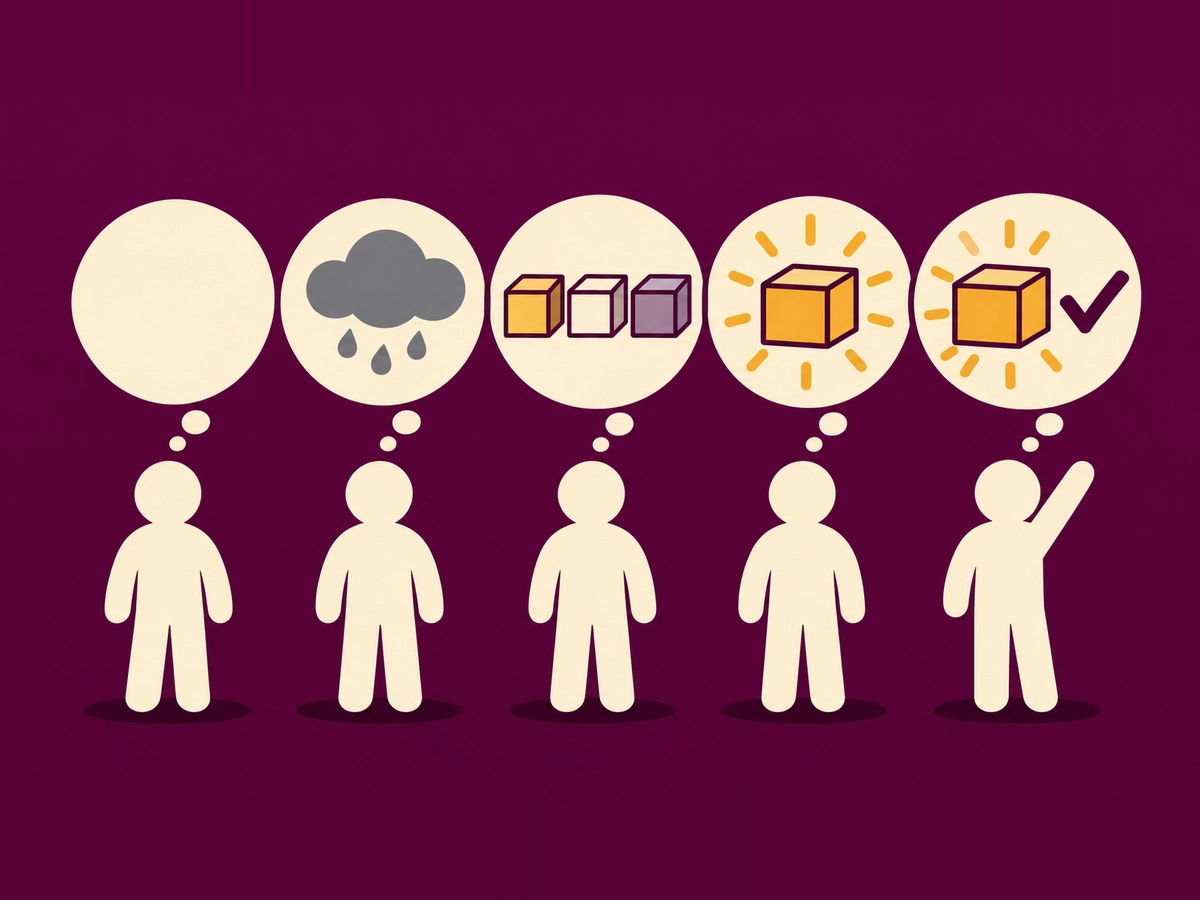
- Something happens
- A result becomes desirable
- The reader weighs possible actions
- Evidence and practical limits shape the choice
- A next step becomes acceptable
This map guides research, though real purchases follow many different sequences.
Motivation is only part of the job
BJ Fogg's Behavior Model describes behavior as happening when motivation, ability and a prompt come together. I'd use that framework to inspect the work Hearthline asks of Delphine.
Suppose Hearthline requires a paid account before visitors can see a sample. Signups are low, so the team answers with "Take control of dinner today!" The request still holds the same work and the same uncertainty.
Inspect the sample before choosing a plan

What to observe
Can a visitor find a recipe suited to their household?
What to ask afterward
What would you still need to do before cooking this meal?
What to record
Keep the observed difficulty beside the exact step where it occurred.
Watch the sample visit, then ask about the work that remains.
Inspect the step where a visitor has to decide whether to register.
A lower-effort route might offer "See a sample five-dinner plan," followed by a readable example with ingredients and substitutions. That only works if a real sample exists. If the button opens a surprise registration wall, ask the team to change the step before you polish the button.
Ability depends on circumstances too. Hand a reader a phone, ask them to compare two Hearthline plans, and note where they zoom, scroll back or give up. Check limits like that before deciding the audience lacks motivation.
Make the next action understandable
Vague demand
Transform your evenings. Start today.
Concrete invitation
See a sample five-dinner plan. Browse the recipes and combined shopping list before choosing a subscription.
Check that the button opens a readable sample without requiring registration. Observe whether readers understand what the subscription includes.
In Katherine L. Milkman's 2011 field experiment, employees at a large firm received reminder mailings for free on-site flu clinics. Each mailing gave clinic times and locations, and some asked employees to write down when they'd go.
The date-and-time prompt raised vaccination by 4.2 percentage points over the control group's 33.1% rate, a statistically significant difference. A date-only prompt added 1.5 points; that difference wasn't statistically significant.
That result concerns flu-clinic reminders at one company. For Hearthline, ask sample users when meal planning would fit their routine before adding a planning prompt; evaluate any purchase effect in a separate experiment.
Give emotion something concrete to attach to
Hearthline's draft promises "Feel calmer about dinner." Put the product's method beside that feeling: its shopping list merges duplicate ingredients from the chosen recipes. A reader can now judge whether the promised relief fits the work they face.
Back in the cereal aisle, a combined list could show Delphine what the recipes need. She'd still have to check what's at home. "Less dinner panic" could fit if customer research supports it, as long as the page admits the work that remains.
If the recipes take a long time to prepare, don't imply effortless evenings. The reader finds that work on Wednesday night either way, and they'll remember who skipped it.
Self-determination theory examines motivation, including whether people experience their actions as self-directed or controlled. It names autonomy, competence and relatedness as basic psychological needs.
For Hearthline, I'd support autonomy by letting visitors choose meals suited to their household and leave unsuitable recipes out of the plan.
Competence concerns feeling capable: a beginner recipe could explain an unfamiliar cooking step. Relatedness concerns connection: a shared plan could invite household members to choose meals together. Check that the product supports each activity before describing it in copy.
Compare "Good parents plan ahead" with "Choose the meals that fit your household; skip the ones that don't." The first leans on a moral judgment to push agreement. The second describes a freedom, provided the product really offers it, and I'd pick it before any test.
Make justification easier without inventing it
Delphine may need to explain the subscription to someone else at home, or to herself. Give her accurate material for that conversation, starting with the real price. Some decisions involve careful comparison from the start, so there's no need to assume feeling always comes first.
Hearthline's honest justification might be modest: "One combined list instead of copying ingredients from five recipe pages."
"Costs less than takeout" depends on which takeout, which plan and what the household buys. Unless you can support that comparison, keep the claim about the combined list.
Hearthline provides recipes and planning tools, and shoppers buy the food themselves. Say so early. A visitor expecting a meal kit can spot the mismatch before paying, which spares both sides a disappointing purchase.
A feature demo supports a claim about how something works, and a customer's account supports what that customer experienced. Neither proves a typical time saving. The FTC's advertising guidance says objective claims need appropriate support, and a guarantee can't stand in for it.
How should you use psychological ideas?
A psychological label can point you at something to investigate, and it can also end the thinking too early. "They need social proof" sounds finished. "New visitors can't tell whether the recipes suit their dietary constraints" names a question you can answer.
Be especially careful with claims that sound universal. When the Open Science Collaboration repeated 100 psychology studies in 2015, 36 percent of the replications reached statistical significance, against 97 percent of the originals.
If Hearthline proposes "Join thousands of families planning dinner with us," check the count. Test the line with actual readers in shopping situations comparable to Delphine's.
For your draft, replace the label with a question about something readers can show you. If visitors expect groceries to arrive, ask them to point to the words or image that created that expectation. That gives the editor a specific place to investigate.
Write your prediction: "A visible sample should help first-time visitors understand that Hearthline sends plans and no groceries." Watch people read the page and ask what they expect to receive. Use their answers to revise confusing wording; test any purchase effect in a controlled comparison.
Separate observation from explanation
What you can observe
- Readers ask whether food is delivered.
- Some visitors open the sample plan.
- A participant describes the signup as a commitment.
What still needs investigation
- Whether product confusion is widespread.
- Whether opening the sample helps a purchase decision.
- Which part of signup creates that impression.
Plan a comparison of page variants with How to A/B Test Copy, and decide what result would answer your question before you look at the data.
Write for a person who can say no
Put Hearthline's price and planning-only scope beside the invitation to subscribe. A reader who wants food delivered can leave with the right understanding. Someone considering a planning tool can weigh its monthly cost against the work the sample shows.
For Hearthline, a complete invitation might read: "Plan five dinners and get one combined grocery list. Browse a sample week, then choose whether a monthly subscription fits your routine." It needs no theory about the reader's personality.
Use customer objections when the draft has to answer a specific doubt, and features versus benefits when the promised outcome has drifted away from the product. Other lessons in Psychology look at narrower mechanisms.
A refusal can reveal an offer mismatch
If a reader expects groceries to arrive, show the planning-only boundary before asking them to subscribe.
Mindful Digest editorial team, this lesson
Build a brief around the next action
Choose an offer and describe the situation that makes it relevant. For a meal-planning service, ask a customer to describe what they check while shopping. Until you have that account, mark the scene as an assumption.
Write down the obstacle and what would let you judge it. "The sample shows ingredients clearly on a phone" needs a readable sample someone can open in the shopping aisle. Draft the invitation, then follow it yourself to check what the reader reaches.
If the sample requires registration, take that obstacle to the team responsible for the signup flow. Leave the brief open to a change in the product experience as well as a change in the words.
At twenty to five the next Tuesday, Delphine opens Hearthline's sample week on her phone. She checks its ingredient list against the fridge photograph and adds rice to her own list.
Read next
Lesson 1 of 7 in Psychology
Sources & further reading
- Fogg Behavior Model
- Theory
- PSYCHOLOGY. Estimating the reproducibility of psychological science
- Advertising FAQ's: A Guide for Small Business
- Using Implementation Intentions Prompts to Enhance Influenza Vaccination Rates