Fundamentals
Features vs. Benefits
Features describe what a product has or does; benefits describe a consequence for a particular person. Connect the product fact to a practical use, keeping the mechanism visible and stopping where the evidence ends. Lead with a feature when it answers the decision the reader already knows how to make.
By the end of this lesson
Connect a feature to a supported benefit and choose which should lead.

Sometime in the 1970s, James Dyson's Hoover Junior vacuum started losing suction. When he looked into it, he found dust clogging the fine mesh of the bag.
After seeing industrial cyclone systems that separate particles from air, he began building cyclone prototypes for a vacuum cleaner. By his own count he made 5,127 of them.
"Cyclone separation" names the feature: separating particles from air. Avoiding the clogged bag that cost him suction was the intended benefit. The distinction connects the design to his cleaning problem without claiming a measured performance gain.
For a worked copy example, we'll use invented writer Tobiah and Tumblefern Lunchware. All its product details are hypothetical, including the removable divider and replaceable seal. He starts his worksheet with Dyson's clogged-bag problem and the intended benefit of addressing it.
Tobiah lifts the divider out beneath a draft that promises to "simplify your busy life." Beside it sits the team's favourite photo: a box full of soup riding in a backpack.
Keep the mechanism in the sentence
A shopper who searched for "removable divider" may need nothing more. Someone new to lunchboxes needs the link spelled out: "Move the divider to make room for a sandwich."
Between the two sits what some writers call the advantage. The divider is removable, so the layout can change, so the owner can pack food of different shapes.
You don't need those labels in published copy. Use them in a worksheet to check whether the benefit really follows. If the link needs a long story to hold together, you may be inventing it.
Baymard's research on product descriptions supports highlighting a few chosen features in suitable product contexts, each with its own image, a short heading and a paragraph. It puts the usual range at two to six core features.
For Tobiah's lunchbox, a photo of the divider in two positions can do more than a paragraph calling the design versatile.
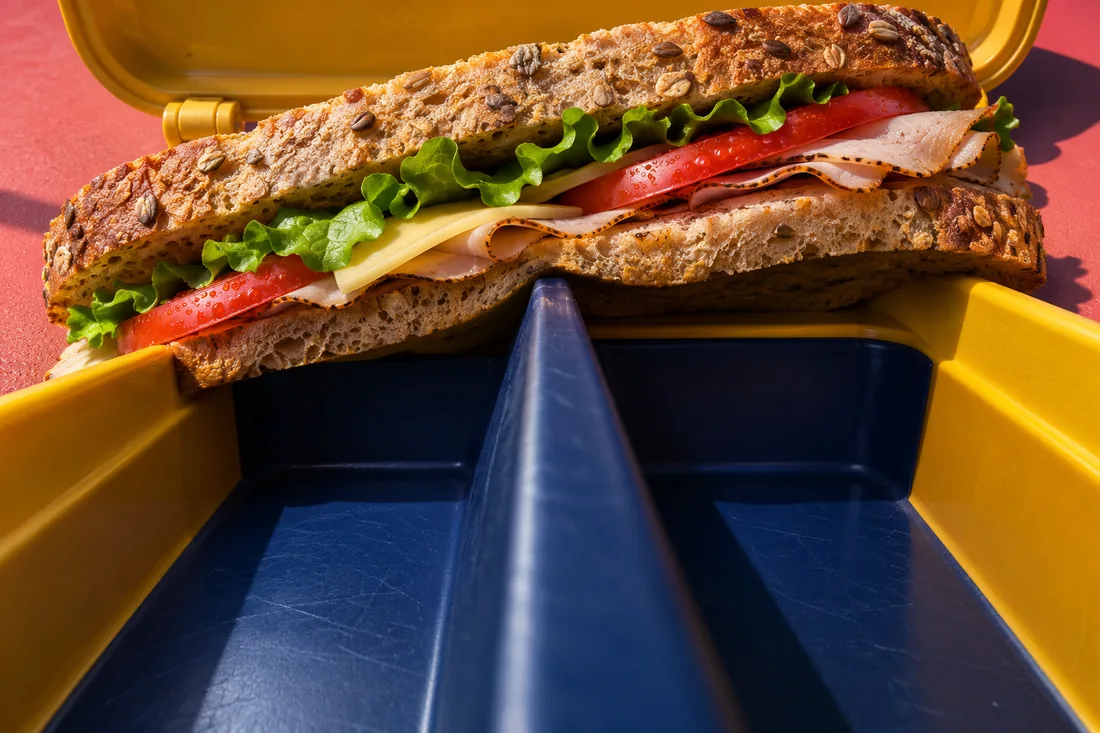

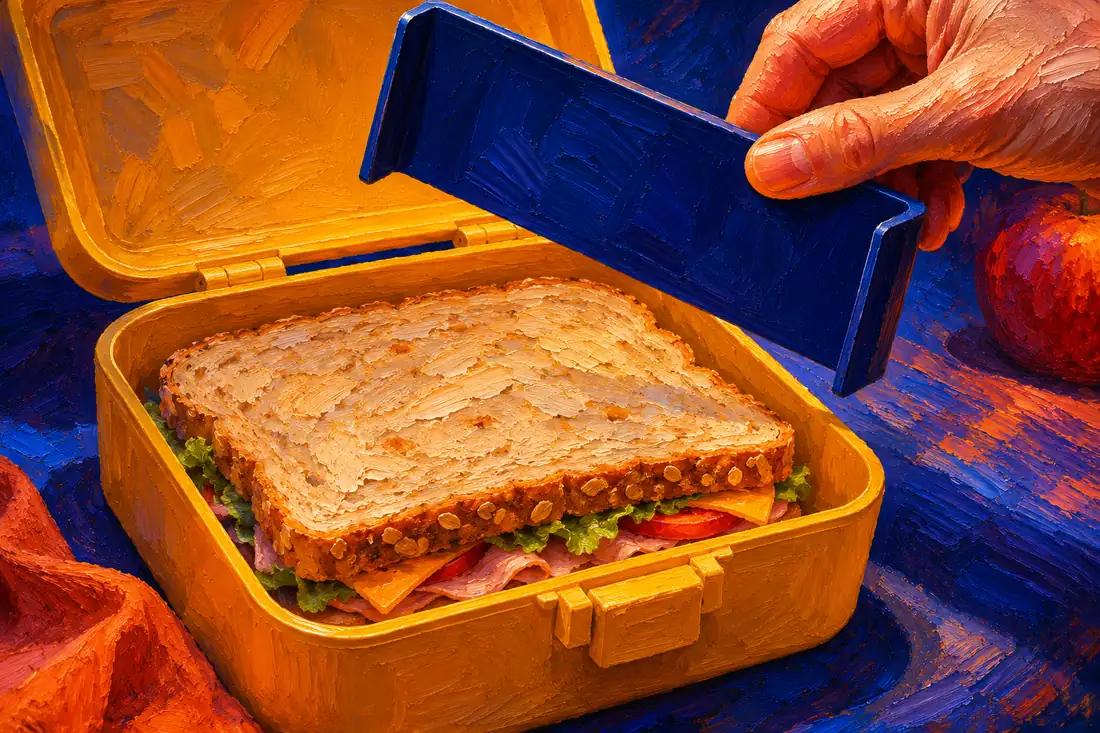

Let the photos carry the mechanism so the copy can name the use.
Two photos that make the divider's case
Photograph the box twice, once with the divider in and once with it out. If the second picture doesn't show a space big enough for a sandwich, the line about making room for one needs another look.
Climb the "so what?" ladder, then know when to stop
Ask what the feature lets the reader do, then why that matters in the situation you're writing for. The divider lets someone change the layout, which helps a parent pack a sandwich one day and small snacks the next.
Test every rung against the product. "Flexible packing" is a fair summary when the divider moves. "Never waste food again" is a long jump, since food waste depends on plenty that happens outside the box.
I'd stop at making room for lunch. Keep climbing toward happiness or belonging and you'll need customer evidence that connects those feelings to this particular box.
Tobiah's benefit ladder, with a boundary
- Product fact: the divider lifts out.
- Practical effect: the inside becomes one larger space.
- Outcome: pack a larger sandwich without the divider.
- Unsupported leap: become an organised person with easy mornings.
Tobiah still needs to check whether the divider locks into several positions and whether liquid can get underneath it. He takes the box to the sink before approving copy about separate compartments.
A benefit needs a person and an occasion
Dyson's benefit started with one person and one occasion: his own cleaner, losing suction. "Save time" says little because it belongs to nobody in particular. A commuter carrying leftovers may care about washing the box between uses, and a parent may care about keeping foods apart.
Someone replacing an old box may mostly want to know whether the seal can be bought separately. "Replace the seal instead of the whole box" is an ownership benefit, as long as the replacement really exists. The customer research lesson shows how to find real situations like these.
Emotional benefits need the same care. If your research shows a feature eases a particular worry, you can say so. Put "I finally feel like a good parent" in a customer's mouth only if a customer actually said it, and keep the context they said it in.
When should you lead with a feature?
Lead with the feature when it's the thing the reader already knows how to judge. Someone checking whether a box fits their bag needs the outside dimensions. Someone replacing a broken part needs the model name and the matching seal.
Nielsen Norman Group's comprehension guidance allows specialised vocabulary for specialised readers, so keep familiar terms for them and explain unfamiliar ones for everyone else.
On a general product page, keep the concrete fact close to the headline. "Make room for a larger lunch" needs a photo or a line about the removable divider. In a comparison table, put the feature straight in the row, so readers can compare the dimensions directly.
Features also separate two products that promise the same broad result. Two lunchboxes can both keep lunch organised and still differ in capacity, cleaning and spare parts. Those details are what a careful buyer compares.
Choose the opening for each situation
Benefit first
- New shopper: Move the divider to fit what you packed.
- Cleaning message: Remove the divider to reach the corners.
- Keep the mechanism and any conditions close by.
Feature first
- Compatibility search: Replacement seal for the Tumblefern rectangular box.
- Fit check: Outside dimensions and inside capacity.
- Lead with the fact the reader came to compare.
Check the evidence behind a product promise
Dyson's prototypes led to the DA 001 in 1993, soon replaced by the nearly identical DC01. Those details record development, so a line like "no loss of suction" still needs evidence of its own.
The soup photo puts Tobiah in the same spot. Someone on the team wants it on the page with the word "leakproof," and a replaceable seal doesn't earn that word by itself. The photo makes a promise even if the word never appears.
The FTC's policy on advertising substantiation says objective claims in US advertising, including reasonable implied claims, need a reasonable basis before they run. How much support you need depends on the claim.
In the draft, Tobiah writes "replaceable silicone seal," because that's the only confirmed fact. If the lid has to be washed by hand, "easy cleanup" mustn't suggest the whole box goes in the dishwasher.
Rewrite the benefit fog
Tobiah's draft still promises to "simplify your busy life." There's no lunchbox in view until the product photograph loads, and someone reading with images off would have to guess.
Tobiah tries this instead: "A lunchbox you can rearrange. Lift out the divider for a sandwich, or leave it in to keep dry snacks apart."
For someone replacing a worn seal, Tobiah would put the model compatibility and ordering details first.
Tobiah's Tumblefern copy, with the connection visible
Product heading
Move the divider. Make room for your lunch.
A concrete action ties the feature to a packing task.
Care instruction
Hand-wash the lid.
A specific care instruction keeps easy-cleanup copy within the product's limits.
Specification row
Divider: removable. Separate liquid-tight compartments: no.
The plain fact stops anyone reading more into the product than it supports.
These lines are drafts for review. Check them beside the photos and specifications, because a tidy sentence that contradicts the diagram still needs work. The good-copy rubric scores clarity and support separately, so a vivid benefit can't hide a weak claim.
Choose a lead benefit instead of displaying the whole worksheet
A product can have twenty plausible benefits, and publishing them all gives each one less weight. Rank the candidates by how much they matter to this reader's decision and how well you can support them. Write down your reasons, because the ranking is still your judgment.
For Tumblefern's page for new shoppers, flexible packing might lead, with spare parts further down. For a campaign aimed at people repairing an old box, that order could flip. This is where a value proposition begins.
Keep the worksheet you didn't use. A comparison table or a support answer may need it later.
Connect five features to a situation
List five verified features of a product you can inspect. Next to each one, note what it lets someone do and who would care. Write a benefit only where that link holds, and mark any claim that still needs proof.
The rest of the sequence is in Fundamentals. Then write one opening that leads with a benefit and one that leads with a feature, each for a different reader. Save both with the product record that supports them.
Tobiah takes the soup photo out of the page draft and files it under "after testing." The photo implies the seal survives an ordinary day of carrying, so one good trip in one backpack won't support it. It returns only after repeated carries under the conditions the page describes.
Ideas to keep
- A product diagram showing which component creates the claimed effect.
- A test record covering the use shown in the photograph.
- A dated confirmation that any advertised replacement part is available.
Read next
Lesson 4 of 8 in Fundamentals
Sources & further reading
- Structuring Product Page Descriptions by ‘Highlights’ Increases User Engagement (Yet 78% of Sites Don’t)
- Legibility, Readability, and Comprehension: Making Users Read Your Words
- FTC Policy Statement Regarding Advertising Substantiation
- Dyson (company)
- Our story