Positioning
How to Write a Value Proposition
A value proposition tells a particular customer what they can achieve with your product and why its way of delivering that result deserves consideration. Connect a relevant buying situation to a demonstrated capability, then write a clear statement with supporting explanation. Check comprehension, relevance, comparison, and proof before choosing the wording.
By the end of this lesson
Write a clear value proposition with a relevant customer result and credible mechanism, then check its comprehension, relevance, comparison and proof.

On a Chinatown bus from Boston to New York, Drew Houston realized he'd forgotten his thumb drive. He later described that frustration as the start of Dropbox, in an account Fortune reported in 2017.
That frustration gives the product idea a concrete starting point. For our worked example, I've invented photographer Gideon and Wrenjam Receipts, including its capabilities and sample copy. His access problem is a receipt he can't find.
Gideon is hunting for a lens rental receipt from a client's launch two weeks ago. His invoice is due tomorrow, and he's typing "rental" into email search again.
Wrenjam lets him save emailed receipts in project folders and export them by project. Its homepage says "Your business, beautifully organized." Gideon still has to guess whether it can help with tonight's invoice.
Decide which improvement the sentence will carry
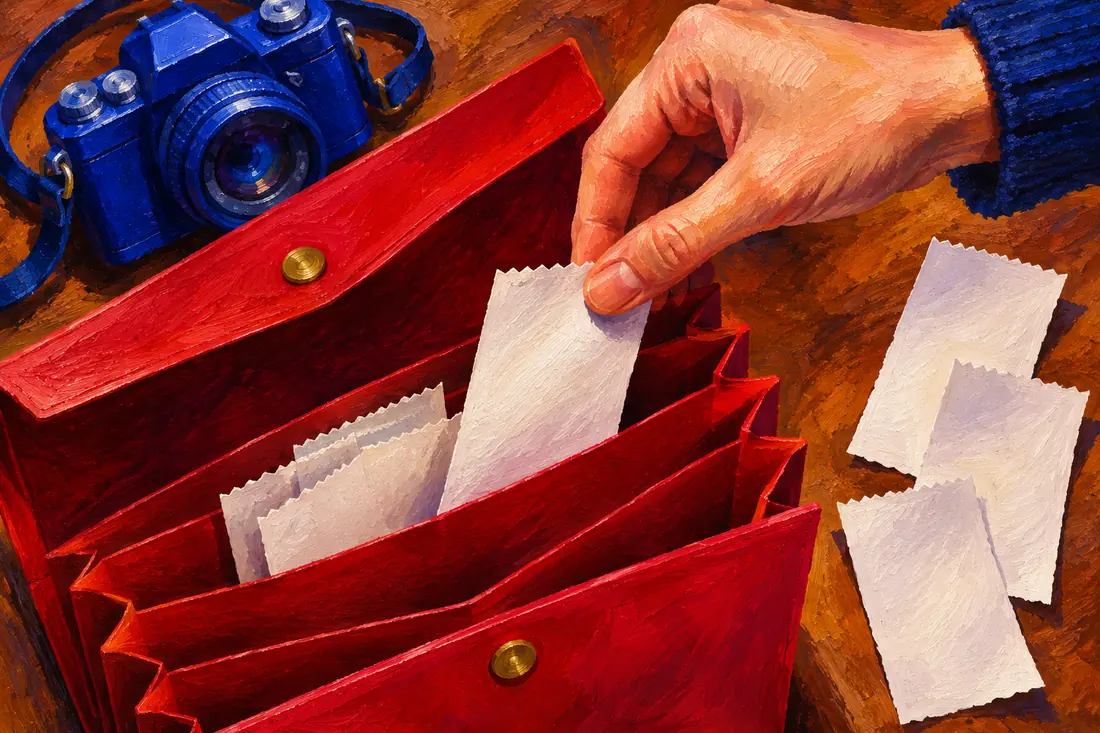
The worn strap in the opening image gives a bag's value proposition a concrete problem to address. For Wrenjam, Gideon's missing receipt serves the same purpose.
Start by separating the customer's job from the product action. Strategyzer's Value Proposition Canvas maps customer jobs, pains and gains against what an offer provides. It gives you somewhere to put each side before you try to join them in a sentence.
For Gideon, "Assign receipts to a project" describes an action inside Wrenjam. "Gather the costs belonging to a client assignment" describes the job he's trying to finish. "Feel in control of the business" reaches beyond both; it needs a concrete change in his evening to become credible.
Suppose the research points to gathering assignment costs before billing a client. Choose that job for this page, following Alex Osterwalder's Strategyzer recommendation to focus on selected high-value jobs. A tax-preparation promise would need a different product check, even if the same receipt folders played a part.
Write the boundary beside the job: Wrenjam gathers records; Gideon still decides which costs belong on the invoice. That boundary will matter when you choose the verb in your headline.
For the deeper decision about audience and alternatives, work through product positioning before you polish the sentence.

Use a template that exposes missing facts
Try this drafting template: "For [specific customer or situation], [product] helps you [observable outcome] by [credible way it works]." Add the alternative or difference when it helps the reader choose. This template and the later checks are editorial aids, with no demonstrated conversion advantage.
For Wrenjam: "Wrenjam helps independent photographers gather receipts for each client assignment by letting them save emailed receipts in project folders." Every part gives you something to verify. Ask the product team to demonstrate saving a receipt and exporting the folder it went into.
The ingredients behind Wrenjam's statement
- 1Customer: an independent photographer billing client assignments
- 2Job: gather the receipts belonging to one assignment
- 3Current alternative: search email and a general receipt folder
- 4Capability: save emailed receipts to named project folders
- 5Evidence to show: a project folder and its export, using sample data
You don't have to force every ingredient into the headline. A category label can identify the audience, leaving the headline free to state the result. Read the whole first screen before you decide that a shorter line has lost essential information.
Move from a complete sentence to readable copy
CXL's value proposition guide emphasizes relevance, value, differentiation and clarity. It treats the proposition as a presentation that can include a headline and supporting copy. Give each part a job: the headline names the result, and the explanation shows how the product gets there.
Wrenjam's first-screen rewrite
The broad promise
Your business, beautifully organized. A better way to work.
Leaves Gideon's receipt search unexplained.
A result the product can show
Find the receipts for each client assignment. Save emailed receipts in project folders, then export the records for the job you're billing.
Names the task and explains the filing step behind it.
"Save" tells Gideon he has work to do. "Automatically organize your expenses" would give the software responsibility for a step he must perform himself. Put a sample folder beside the copy so he can see what assigning a receipt involves.
Write alternatives that let you compare which result deserves the lead. "Collect each assignment's receipts in one folder" emphasizes gathering. "Bring the receipt record to your next client invoice" emphasizes billing, though it could imply that Wrenjam creates invoices.
"Stop searching email for assignment receipts" speaks directly to Gideon's evening. It also promises too much if he still needs to find receipts he hasn't saved. Keep the benefit within the records the product actually holds.
Give the difference a fair test
Ask what gives Gideon a reason to consider Wrenjam alongside email search. A project folder groups the receipts he's assigned to a job, even when their email subjects differ. That explains a possible advantage over repeating a keyword search.
It doesn't establish an advantage over every expense tool. Ask photographers to compare the project workflow and exported file with their current approach before you call either a reason to switch.
USP vs. value proposition vs. positioning explains the different jobs those labels do.
When the Wrenjam team asks to add tax preparation to the headline, request an export they can demonstrate for that purpose. Check what it contains and what Gideon would still have to prepare before approving the added claim.
How do you check a value proposition?
Review the draft for comprehension, relevance, comparison and proof. Give each judgment a passage from the page or a product demonstration. That makes "I don't love it" easier to turn into a change someone can inspect.
A working test for one statement
Comprehension
Can a likely customer describe what the product helps them do without borrowing your slogan?
Relevance
Can they connect that result to a recent task or decision they actually faced?
Comparison
Can they explain why they might consider it alongside their current approach?
Proof
Can your team show the capability and support each outcome the statement implies?
For comprehension, check whether "records" means receipts to the reader. For relevance, ask about the last assignment they billed. For comparison, have them show how they gather those receipts now, then identify what the proposed workflow would change.
For proof, open a sample export and compare it with the saved receipts. "Expense reports ready for your accountant" implies a format and completeness the product hasn't established. "Export the receipts you've saved for a project" gives the team a claim it can demonstrate.



Compare the exported file with the saved records before publishing the claim.
Show the export the product can actually make
Sample project folder → selected receipts → exported file
Test with people who face the decision
Show the statement with a simple product visual to likely buyers. Ask them to explain what they think Wrenjam does, then ask how they gathered expenses for their last assignment. Keep their explanation beside the draft they saw.
Asking whether Wrenjam would save them time supplies the benefit you're supposed to be investigating. If a photographer says they would still search email, ask which receipts they'd be looking for and why those would be missing from the folder.
Separate misunderstanding from lack of value. Someone who thinks Wrenjam creates invoices needs a clearer page. Someone who understands the folders and already has a satisfactory way to gather receipts gives you a question about fit.
Test findings need different fixes
A wording problem
- Readers assume Wrenjam creates invoices
- They cannot identify what gets exported
- They think project folders sort receipts automatically
A value or fit problem
- Readers understand it but rarely bill by assignment
- Their current expense tool already handles the task
- The export omits information their workflow needs
A handful of conversations can reveal ambiguity; it can't predict conversion. If you later run a page experiment, choose the business outcome and measurement plan before viewing results. For Wrenjam, keep other page changes steady so you can interpret a comparison of the two messages.
Keep the core stable across message variations
An ad might start with searching email, while the product page shows a folder. Both need to lead to the same task and capability. An ad promising automatic expense sorting would send a different expectation into the page you've just checked.
Record the chosen statement beside its supporting evidence. Keep "automatic sorting" in the rejected-wording column, with the manual filing step as the reason. Use messaging hierarchy to make that decision available to the next person writing an ad.
Write a card for one buying situation
The Positioning lessons can help you choose the audience for your own card. Here is Wrenjam's completed version, with the remaining work visible:
For independent photographers billing client assignments
Gather each assignment's receipts before you invoice.
Save emailed receipts to a named project folder, then export the receipts you've added. You choose which folder each receipt belongs in. Check for missing costs before preparing your invoice in your usual tool.
Put a sample folder and its export beside that copy. The page now shows what Gideon can gather and what he still has to decide.
At his desk, Gideon finds the lens rental email and saves its receipt to the launch folder. He checks the export against his other costs, then opens the client's invoice and enters the expenses he's agreed to bill.
Read next

Lesson 2 of 6 in Positioning
Sources & further reading
- The Value Proposition Canvas
- Unique Value Proposition: How to Create a UVP (With 7 Examples)
- The high value customer jobs you need to focus on
- Founder of Dropbox got the idea on a Chinatown bus