Research
Copywriting Research: Where Good Copy Actually Comes From
Copywriting research investigates the buying situation and what the offer can honestly deliver so you can decide what to say. Start with a specific reader decision, keep customer, product, and market evidence separate, and preserve sources. Finish with a message recommendation, supported claims, and the unresolved question that could change the direction.
By the end of this lesson
Create a one-page research brief and claims sheet, then identify the next research action that could change the opening message.

David Ogilvy was reading about Rolls-Royce when he found his headline: a statement that, at sixty miles an hour, the car's loudest noise came from its electric clock.
When I got the Rolls-Royce account, I spent three weeks reading about the car
Ogilvy's own account, written years later, of researching the car.
In his 1983 account, he says he followed that headline with 607 words of factual copy. His reading supplied both the headline and the material beneath it. Start your own research by looking for a detail you can support all the way through the page.
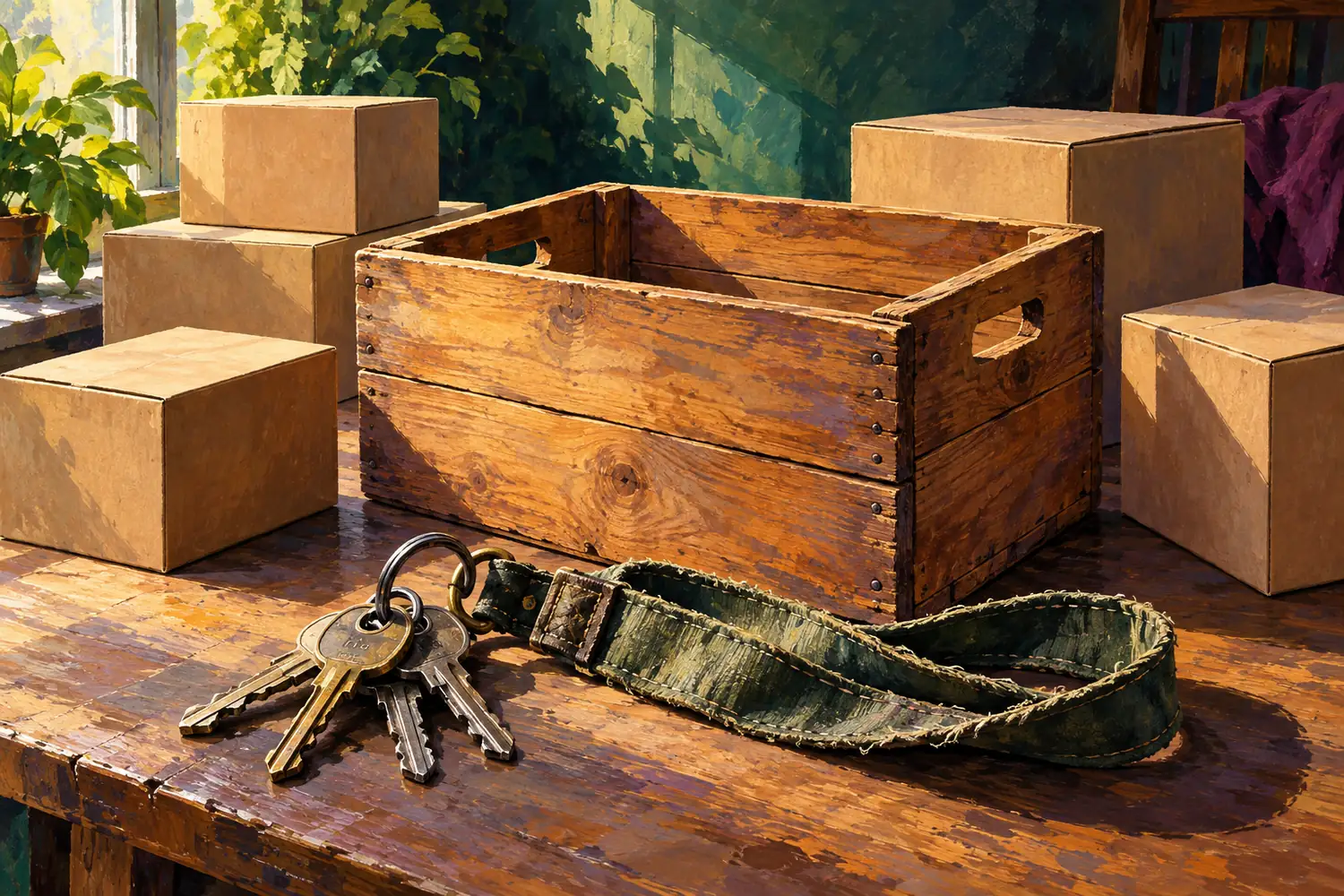
Try that approach with Bramblecrate and its renter Leona, both invented. At her kitchen calendar, she pencils in Thursday for box delivery, a day ahead of packing on Friday evening.
Bramblecrate's brief asks for a sustainability headline. Before writing it, you need to find out whether the service can deliver what Leona has pencilled into her week.
Give the research a job
Start with a question you could answer with evidence: what does Leona need to know before she books boxes for the weekend? That question tells you which screens to inspect and which parts of a conversation deserve a follow-up.
Put the sustainability idea beside that question in your notes. To recommend it as the opening, you'd need evidence that it matters at this point in Leona's decision, plus support for the environmental claim itself.
Write down what would change your recommendation. If Leona already has boxes, delivery may not matter to her. If Bramblecrate doesn't cover her address, no wording will make the offer fit.
A small evidence record
Customer account
- Record the last move and when the renter needed boxes.
- Keep the speaker and interview context attached.
Product record
- Save the booking screen with the applicable delivery terms.
- Include the version or date inspected.
Alternatives record
- Record how the renter got free cartons last time and whether collecting them took another trip.
Keep three kinds of evidence separate
Leona's calendar gives you customer evidence. The booking screen supplies product evidence; her account of collecting free cartons shows an alternative she could choose again.
Write "Lead with delivery" in a recommendation field. Keep "Leona plans to pack Friday evening" in the customer record, beside the interview it came from. A colleague can then challenge your proposed opening without accidentally rewriting what she told you.
A note that says "Renters need Thursday delivery" reaches beyond Leona's account. Keep her Friday packing deadline attached to her name; collect other renters' schedules before describing Thursday delivery as a wider priority.
Read the booking terms before you turn a screenshot into copy. For US advertising, the FTC expects a reasonable basis for an objective claim before it runs, so attach the supporting record to each delivery line you propose.
Begin with the offer in front of you
Open the booking flow and try to arrange the delivery Leona wants. Follow the path far enough to see what the service actually promises before choosing words for it.
After you enter a covered address, Bramblecrate lets you pick an available delivery day. Save the delivery terms with that screen.
Now put the selectable day beside Leona's calendar. The screen offers Thursday and gives no arrival hour. "Choose a delivery day" fits what you've seen; "Get your boxes before work" would need evidence you haven't found.
If Leona can't be home all day, a delivery day alone may leave her unsure whether anyone will be there to take the boxes. Keep that worry beside the screenshot for when you talk to the person who runs delivery.
Record the address you used in the check so a colleague can repeat it. If a later version changes the available days, flag any claim that depended on them.
Find the moment behind the purchase
Copyhackers lists interviews and reviews among the research inputs a writer can use. For this brief, start with the boxes Leona collected for her last move. Let her describe what happened before you ask what she thinks of Bramblecrate.
GOV.UK's interview guidance recommends open questions and accounts of real experiences. Try "Tell me how you got your boxes last time," and follow the events she describes.
In the invented interview, you ask, "What did you have to arrange before packing?" Leona says, "I planned to pack Friday evening, but collecting the cartons had to fit around work."
That changes "Lead with delivery" to "Help renters check whether delivery fits around work." Keep the sustainability direction for later investigation; Leona has named a scheduling constraint the booking screen only partly answers.
If she mentions a second trip for cartons, ask, "What happened when you got home with the first load?" Compare that with "Would scheduled delivery be better?" The second question puts your proposed answer into her mouth before you've understood the trip.
Ask permission before you record, and stick to what you agreed about using the material. The voice-of-customer lesson shows how to keep her wording with its context. Mark exact quotations apart from paraphrase, so a memorable phrase never turns into a testimonial by accident.
Include the alternative that costs nothing
Leona mentions the grocery shop down the road. Last time, she asked there for spare cartons. Those free cartons belong in the comparison when you ask what would make a rental worth paying for.
Ask what she brought home and whether she needed another trip. If she got enough boxes in one visit, write that down as plainly as any complaint. Your rental recommendation has to account for an alternative that may already work for her.
The competitor research lesson helps you map the current workaround. April Dunford counts doing things the current way as one of a product's real alternatives, and here the current way is a trip to the grocery shop.



Use the events of her previous move.
Follow up on the free alternative
Put the free cartons and the rented crates side by side. Under each, write what Leona said it took to get them home, in her own words. Leave the rental column empty where she hasn't told you anything yet.
How can you structure a short research sprint?
Try ninety minutes for a first look at a small brief. It's a planning exercise, so leave time afterwards for the questions it raises.
Use existing material you have permission to read. Support records or recent interviews can stand in when a customer isn't free to talk. The review-mining lesson can help if reviews are among those records.
Keep conflicting accounts apart. If one renter finds cartons easily and another can't collect enough, record their different circumstances. "Renters struggle to find boxes" would erase a difference that could change who your page speaks to.
A proposed ninety-minute first look
Frame the decision
Write the packing decision and the delivery question.
Inspect the offer
Try choosing Thursday in the booking flow; note what remains uncertain.
Read customer material
Read available accounts of recent moves, keeping each account separate.
Check alternatives
Look at how renters found cartons without a rental booking.
Make the handoff
Write a provisional recommendation and the evidence still needed.
Turn the booking record into an opening
At the end of the first look, you still have the sustainability brief. You also have a reason to open with booking boxes before packing day. Put each candidate next to the evidence behind it.
Here is the completed one-page brief for this invented exercise. Each record refers to material inspected in the lesson.
| Brief field | Completed entry |
|---|---|
| Reader and decision | A renter planning a packing weekend, deciding whether booking fits that schedule. |
| Customer evidence | Leona's interview: Friday-evening packing; last time, carton collection had to fit around work. Her current calendar puts Thursday delivery ahead of packing. |
| Product evidence | The saved booking screen offers available delivery days after a covered address is entered, including Thursday in this example. |
| Alternative | Free grocery cartons; whether collecting enough required another trip remains a question to investigate. |
| Message recommendation | Help renters check whether delivery fits their schedule, beginning with day selection; keep sustainability pending evidence of relevance and environmental benefit. |
| Next action | Delivery owner to review the wording and clarify handover arrangements so renters can judge whether they can receive the boxes. |
Use the accompanying claims sheet to keep proposed wording and publication decisions together.
| Candidate claim | Evidence and copy decision |
|---|---|
| "Choose a delivery day for your reusable moving boxes." | The booking screen supports day selection for covered addresses. Keep address eligibility and availability visible near booking; submit for delivery-owner review. |
| "Arrives before you leave for work." | No arrival-hour terms support this in the record. Exclude unless the delivery owner supplies terms supporting a specific arrival claim. |
| "A better planet starts with a better box." | No environmental comparison supports this in the evidence set. Replace; reconsider only with substantiation and evidence of relevance to this decision. |
The research-to-copy lesson covers choosing and arranging a message. This brief gives the next writer the recommendation and its basis; the claims sheet shows which wording can advance to review and which must stay out.
Bramblecrate opening
Brief-led draft
A better planet starts with a better box.
Research-informed candidate
Choose a delivery day for your reusable moving boxes.
The candidate describes the booking control visible in the saved screen.
Ask the delivery owner what Thursday promises
Find the sentence in your own draft that depends on an unconfirmed product promise, and write the question that would settle whether it can stay. The Research collection has methods for pursuing that question.
Suppose the team wants to add "arrives before you leave for work" to Bramblecrate's opening. Mark that line "excluded" and ask the delivery owner to approve the day-selection wording or supply terms supporting a specific arrival claim.
The working opening can now proceed to review without the morning promise. If confirmed terms later support an arrival window, update that claims-sheet row and add the exact window; Leona's preferred schedule alone cannot authorize it.
Read next

Lesson 1 of 8 in Research
Sources & further reading
- 7 copywriting research techniques conversion copywriters love
- FTC Policy Statement Regarding Advertising Substantiation
- Using in-depth interviews
- Positioning and Competition
- Ogilvy on Advertising (digital edition)