Research
Review Mining for Copywriting
Review mining collects and sorts public accounts to uncover buying situations and concrete language for copy. Set a research question and collection rule, preserve each review's context, and link excerpts to their original records. Develop themes with exceptions intact, then check product evidence before turning an insight into original copy or an endorsement.
By the end of this lesson
Build a two-sheet review-mining workbook with stable source IDs, a small codebook, and one bounded finding that informs draft copy.

"If you think you need rehab, you do." Joanna Wiebe found that line in an Amazon review while working with the rehab center Beachway. Interviews and surveys had proved difficult, so she read more than 500 reviews of six addiction books.
Her October 2014 Copyhackers account describes testing the line against "Your Addiction Ends Here." She reports more than 400% more button clicks and over 20% more lead-form submissions. Those self-reported outcomes belong to that test; they don't predict another page's results.
If you think you need rehab, you do.
Headline reported in Wiebe’s firsthand account.
The books and the center addressed the same problem through different kinds of help. That connection made the reviews worth reading. To apply the method yourself, you'll need a way to keep a striking sentence attached to the situation it describes.
What question should the reviews answer?
For a worked research sheet, I've invented Marit and the lunch-container maker Ferncaddy, along with every commuter review and record ID below. Marit has typed "quality?" beside a review about sauce leaking into a bag on a train.
Her question is which transport problems matter when people choose a lunch container for a train commute. "Quality?" would mix this leak with complaints about appearance, leaving her unable to tell which problem a page should address.
Follow Wiebe's example of matching the source to the problem. Marit includes reviews of containers carried to work, even when they're sold by another maker. A review about keeping food in a fridge would answer a different question.
Make a sampling rule you can explain
Set the collection boundary before selecting the most memorable lines. Marit includes first-person accounts of packing lunch and carrying it to work. She records her date range and the product versions, so a colleague can repeat the search.
Include accounts of success under relevant conditions. If Marit searches only for "leaks," she'll have excluded the very accounts that could show when a container performs well.
Pick sources by situation, and keep each source type identifiable. A discussion thread, a seller-curated testimonial and an independently posted review each deserve their own label in the sheet.
Read across rating bands. A three-star rating alone can't tell you whether the account describes your reader's situation. When reporting a theme count, give the denominator and explain how you selected the records.
A five-star account might say the reviewer wraps the box in another bag. Keep that workaround in the excerpt: it changes what the praise tells you about carrying lunch.
"Seven of thirty selected reviews mentioned liquids" describes the collected material. The prevalence of that problem among commuters remains unknown. Wiebe's large reading effort likewise doesn't make Amazon reviewers representative of everyone seeking help.
Build a sheet with two connected tabs
Marit creates a Reviews tab with one stable ID per review. An Excerpts tab holds useful passages linked to that parent ID. Several excerpts from R012 still represent one source review.
Keep the source URL and review date with the product version. Record visible context, including any disclosed incentive, and mark missing details unknown. A username won't establish a reviewer's age or income.
Give exact wording and interpretation separate columns. Marit can then revise her analysis without overwriting the account that prompted it.
Marit leaves the leaking position unknown. "Fine upright" doesn't establish how the container was positioned when the sauce escaped, so she can't code this as a tipped-container failure.
| Field | Sheet entry |
|---|---|
| Excerpt / parent ID | E012a / R012 |
| Exact wording | Fine upright, but the sauce got into my bag on the train. |
| Visible situation | Sauce leaked during a train commute; its position when leaking is unspecified |
| Descriptive tags | transport leak; sauce |
| Interpretation | Carrying conditions may matter to the seal claim |
| Follow-up | Inspect instructions and available leak-test conditions |
Store only relevant material, respecting access restrictions and platform terms. Keep identifying details out of presentation slides. The sheet should let a colleague reopen the source without distributing an unnecessary profile of its author.
Tag what happened before naming what it means
"Transport leak" describes an event in Marit's record. "Trusting lunch out of sight" would be a broader interpretation to investigate across accounts. Nielsen Norman Group's thematic-analysis guidance distinguishes organizing observations with codes from developing themes.
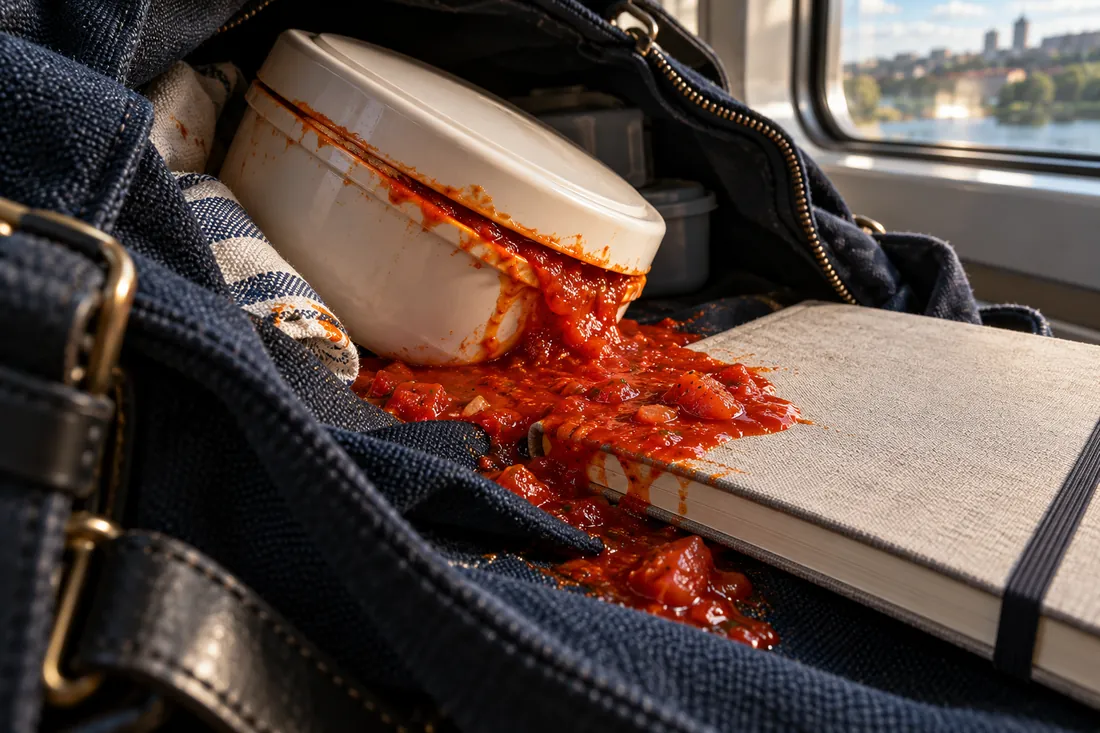

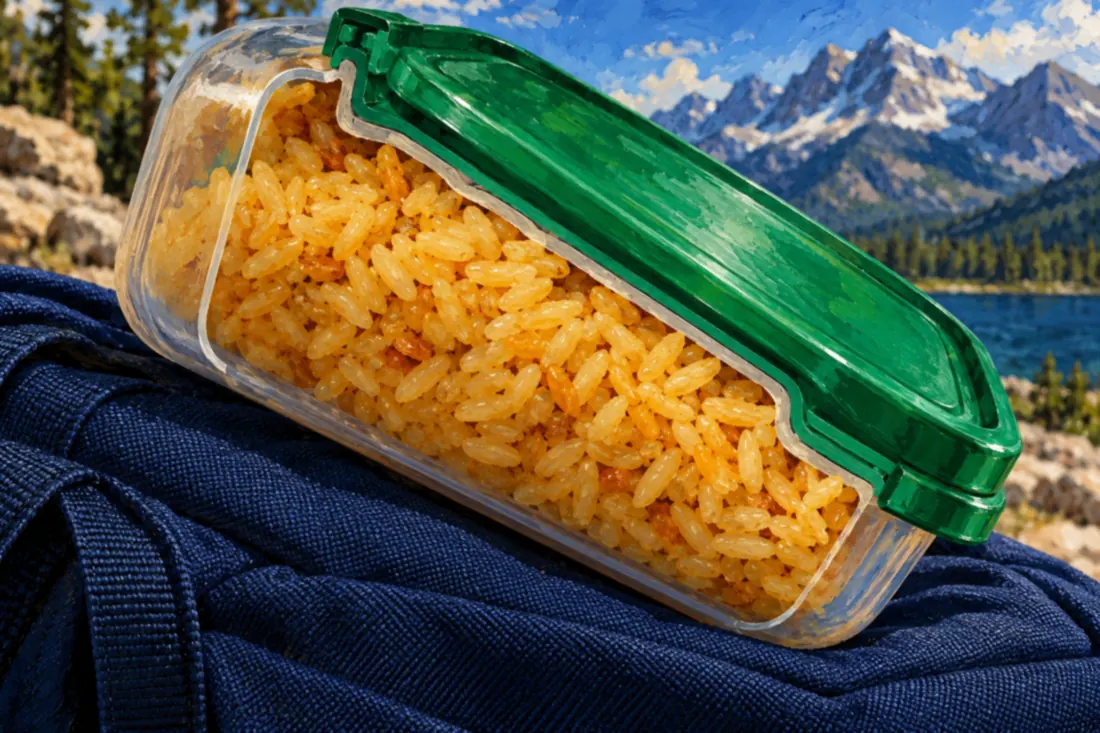

These accounts concern different foods and leave Ferncaddy’s performance to be checked.
Conditions make two transport accounts different
E012a records a sauce leak during a train commute. E024a records rice staying contained after a tip; the reviewer explicitly had not tried soup. Keep these as separate conditions when comparing the accounts.
Marit keeps a small codebook at the top of the Excerpts tab. Each tag has a definition and a rule for applying it.
| Tag | Definition | Inclusion rule |
|---|---|---|
| Transport leak | Contents escaped during carrying | Include an explicit report of escape during transport; exclude leaks reported only in storage. |
| Sauce | Sauce was among the contents | Apply only when sauce is named; don't infer the food from a stain or a leak. |
| Contained after tip | Contents stayed inside after the container tipped | Require both tipping and no escape; retain the named food and any untested foods as context. |
| Packing goal | A desired way to pack or carry lunch | Include a stated wish; exclude goals inferred only from a complaint. |
E012a gets "transport leak" and "sauce"; its carrying position stays unknown. E024a gets "contained after tip," with rice recorded as context and soup untested.
As the sheet grows, merge tags only when they describe the same event. Split "latch difficulty" if some accounts concern opening and others closing. Ask a colleague to code E012a independently: if they write "broken lid," check where the account establishes damage.
Separate pain points from desired outcomes when an account contains both. Preserve the connection to the original review even if one passage receives several tags.
Count distinct review IDs under each condition
Count each parent review once per theme. Investigate identical wording across listings before counting it again, and keep possible duplicates marked in the raw records.
Compare product versions separately. A complaint about an old lid may raise a different product question from the same complaint about the current design.
Marit counts E012a and another excerpt from R012 once under transport leaks. E024a stays in the comparison as a successful rice trip, with its "haven't tried soup" condition attached.
An outcome and an exception beside R012
Desired outcome: E019a
I wanted to put lunch beside my notebook without wrapping it in another bag.
Exception: E024a
It tipped over with rice inside and nothing came out. I haven't tried soup.
Compare these excerpts with R012: one identifies the packing goal; the other preserves a successful trip and its limits.
Keep authenticity uncertain where you lack evidence. A purchase badge or a detailed account supplies context; neither gives you a reliable way to certify the review's truth.
Write from the insight without manufacturing an endorsement
Wiebe took a review line into a headline test. Before adapting language yourself, decide whether you're writing original copy or publishing an attributed endorsement. A competitor's reviewer can't become a testimonial for your product, and finding words in public doesn't settle permission to republish them.
Marit takes the transport theme to the product team. Suppose Ferncaddy's instructions and testing support solid meals in transit while requiring liquid dishes to stay upright. Her candidate claims must retain those conditions.
Message candidates after product checks
Claims the reviews do not establish
- Never leaks, whatever you pack.
- The lunch box every commuter loves.
Original copy with clear conditions
- A slim container for the bag you take to work.
- For solid meals on the move. Carry liquid dishes upright.
Check the quieter promises too. "Slim" needs dimensions, and fitting a work bag depends on its size. Use research into copy to connect the selected message with the evidence the page needs.
Keep the output small enough to use
Marit's handoff says, "Carrying liquids needs further investigation," with E012a attached and the rice exception beside it. Her coverage note names the selected sources and their date range. The product owner gets a specific question: which carrying positions have been tested with liquids?
For a message test, she keeps the product conditions fixed and compares two supported ways of describing the same offer. Record clicks separately from completed orders, just as Wiebe separated clicks from submissions. A stronger click response alone can't establish that more people bought.
If carrying position remains unclear, voice-of-customer research can guide a follow-up. Ask what the person packed and how they carried it, keeping their answer attached to the original record.
Make a theme another person can trace
Use a small first batch to check whether your sheet preserves enough context for another writer. Expand it after you've resolved ambiguous tags.
Build a sheet someone can reopen
State
Write your question and collection rule before reading six relevant public reviews.
Tag
Tag the excerpts with their context intact.
Write
Attach the source records to a theme and its exceptions. Mark any resulting product claim that still needs checking.
Choose a follow-up method through Research if a product or customer question remains open.
Marit replaces "quality?" beside E012a with "sauce leak during train transport; position unknown." In the next cell, she assigns the product owner a check of the liquid leak-test conditions.
Ideas to keep
- Question: what makes a lunch container suitable for a train commute?
- Include: first-person accounts describing transport, packing or unpacking.
- Record: review date, product version, source URL, rating and sort order.
- Keep separate: seller-selected testimonials and community discussion replies.
- Preserve: accounts where the container worked well under the same conditions.
Read next
Lesson 3 of 8 in Research
Sources & further reading
- Amazon review mining for copywriting. What it is, how to do it and where to use it in your copy.
- Analyze Qualitative Data: Thematic Analysis
- The Consumer Reviews and Testimonials Rule: Questions and Answers