Fundamentals
Copywriting vs. Content Writing: What's the Difference?
Copywriting guides a reader toward a particular decision or action; content writing primarily helps them understand a subject or complete a task. Choose the immediate reader outcome before choosing the format. When a page does both jobs, deliver the promised help and make the transition to the offer visible.
By the end of this lesson
Brief an educational page and a purchase page, with an honest handoff between them.

Where could a motorist find fuel? The Michelin brothers' free Red Guide helped answer that question in France in 1900. Its practical information also covered garages and hotels.
The immediate job was concrete: help a motorist find what they needed on the road. In a commercial brief, useful guidance can give readers a reason to return to a brand before they need to buy. That longer purpose still leaves today's practical question to answer.
We'll test that distinction with Mosswhistle Pots, an invented planter brand, and Nessa, an invented reader at her balcony door. She opens its care guide with a watering can in her hand. A product pitch fills the screen before she reaches the help she came for.
How do you decide whether an assignment needs copywriting or content writing?
Ask the person commissioning the page what the reader should be able to do afterwards. For this assignment, "decide what to check before watering my plant" gives you an educational job. "Decide whether this planter fits my windowsill" gives you a purchase decision to support.
For Nessa's guide, you'll write content that helps her complete a care task. On the planter page, you'll write copy that helps her judge a purchase. Agree on that immediate outcome before choosing a format.
The Content Marketing Institute describes content marketing as having an eventual commercial objective. That still leaves room for a page whose immediate job is helping someone.
Michelin's guide answered motorists' practical questions. Nessa's guide owes her a route to the care information even if she keeps her current pot.
Use the introduction to copywriting to brief the purchase page. For the care guide, agree on helping someone apply the relevant instruction to their current plant. Write that outcome where the reviewer can see it before commenting on tone.
Two jobs for Mosswhistle Pots
Help the reader learn
- The reader has a drooping plant and a watering can in hand.
- Help them decide what to check before adding water.
- The promised help must be usable without buying a planter.
Help the reader choose
- The reader is already considering a reservoir planter.
- Show how this model comes apart and what it costs.
- Give them enough information to decide whether it suits them.
The reader's question changes the opening
Nessa needs to decide whether to use the water she's carrying. The guide's opening should help her make that check with her current pot.
For this invented exercise, suppose her plant's label says to water when the soil surface feels dry. Its matching care entry explains what to do:
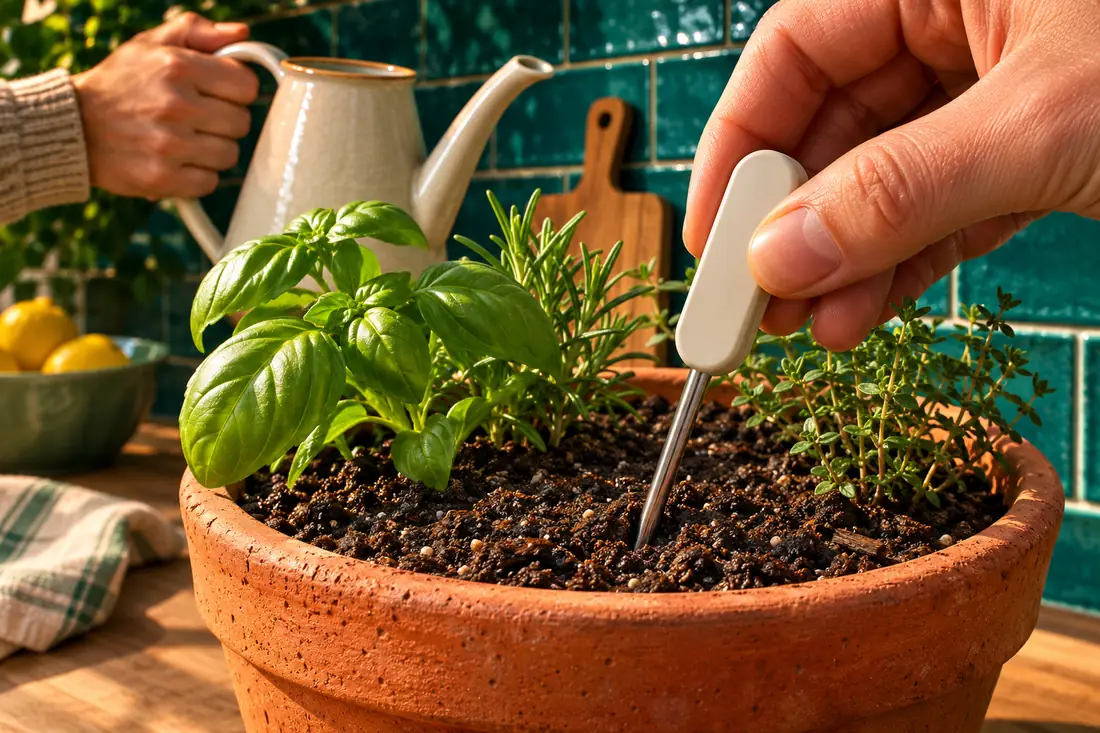
Feel the soil surface. If it is still damp, the condition on this plant's label hasn't been met. Leave the watering can aside and check again later.
The entry explains how to apply this fictional label; a real guide needs reviewed instructions for each plant. Nessa can now check a condition before acting. A request to choose a planter size would leave her original question waiting while she started a different task.
For a visitor comparing reservoir planters, try the opening "Will this planter fit your windowsill?" Put the model dimensions beside its photograph so the reader can check the fit. That gives the purchase page a task as concrete as finding fuel in the Red Guide.

Give the same fact two different roles
The Mosswhistle planter has a removable reservoir. You have a photograph showing the pieces apart and product instructions that describe removal. That fact can play several roles, depending on what the reader is doing.
A buying guide serves someone already comparing planters, a different reader from the one holding the watering can. There, you might explain a feature they can inspect across products.
On the product page, you can show how this particular model comes apart. In support instructions, an owner needs the steps for handling the planter they already have.
Use the features and benefits lesson to connect reservoir removal with an action the product instructions describe. Claims about healthier plants would need evidence beyond a photograph of the pieces.
In that buying guide, "look at how you would reach the reservoir" gives someone a comparison criterion. On the product page, "our reservoir lifts out separately" explains why this model might suit them. Review each passage against its brief to check that the fact answers the reader's question.
One reservoir, different writing jobs
Buying-guide passage
Before choosing a reservoir planter, look at how you would reach the reservoir to clean it. Follow the care instructions for the model you use.
Buying guide: helps someone compare reservoir access across planters.
Product passage
Our reservoir lifts out separately. See the photograph of both pieces before choosing a size.
Explains this product's mechanism and points to inspectable support.
Support passage
Empty the reservoir before lifting it out. Follow the supplied cleaning instructions before putting it back.
Helps an owner complete a task without another buying argument.
Where a helpful article turns into a disguised pitch
Now reread the draft Nessa opened. Its title offers help with the plant, and its first screen asks her to choose a planter size. Find the first line that advances the promised care task; that is where the revised opening belongs.
Move the opening sales paragraph into the product section. Keep the care index and the reviewed plant-specific information above it, where Nessa can reach them.
The FTC's dark-patterns press release includes advertising disguised as independent editorial content among the practices it describes. Label the product section so the reader can see who is selling the planter.
For this page, the heading "The Mosswhistle Pots reservoir planter" identifies the seller and the product before the invitation to choose a size.



The product panel needs a visible seller and a predictable destination.
Review the guide in its built layout
On a phone, follow the care index to a plant entry. Check whether the shopping panel interrupts that route. Ask an unfamiliar reader to find the entry without prompting, and save the screen where they hesitate.
Hybrid pages need a visible handoff
Your colleague asks to keep the planter on the same page. The writer adds a transition after the care answer: “If you're considering a reservoir planter, here's how the Mosswhistle Pots model comes apart.” The transition lets Nessa choose whether to continue into the product section.
Use the same test when deciding what makes the copy work: can someone do what the passage promised? Read the new transition with the reservoir photograph next to it. A reader who wants to compare planters can see what the invitation offers before choosing to continue.
Measure the job you assigned
Choose what to examine before the page goes live. For the care guide, you could ask readers to explain their next check using the instructions you've supplied. For the product page, you could investigate whether people can find the reservoir details and judge suitability.
Page views alone won't tell you whether the person understood the care advice. A product click also doesn't tell you why they clicked. You would need further evidence before describing either as a successful learning outcome.
If the business also tracks later purchases, record that as a separate business measure. For the guide's review, keep the observation you can inspect: can Nessa explain what she needs to check before adding water?
Choose evidence for each brief
Care-guide check
- Ask the reader to explain the condition to check before watering.
- Record which instruction they used and any help they needed.
Purchase-page check
- Ask the reader to compare a size with their available space.
- Record which product detail they couldn't find.
Pair each brief with its opening
For your next assignment, write a brief and an opening for each job: care guidance and product choice. Each brief should name what the reader can do afterwards. The copywriting process carries those briefs through review; the other lessons in Fundamentals can help you develop the passages.
Review the draft in its layout. If a colleague moves an order button above the care answer, use the agreed reader outcome to decide where it belongs:
Review the two drafts
Read the guide
Read the care entry on a phone and explain what to check before adding water.
Inspect the product
Find the model dimensions and compare them with the size selector.
Check the handoff
Open the product invitation and compare its label with its destination.
Record the revision
Save the place a reader hesitated and assign the change to the writer.
Nessa opens the matching care entry and checks the soil surface. It is still damp, so she leaves the watering can aside. She can apply the instruction to her current pot and decide whether to read about another one afterwards.
Read next

Lesson 2 of 8 in Fundamentals
Sources & further reading
- Getting Started
- How Users Read on the Web
- FTC Report Shows Rise in Sophisticated Dark Patterns Designed to Trick and Trap Consumers
- 100 years of exploration with the MICHELIN Green Guide!
- The MICHELIN Guide