Email Copywriting
Good email copy starts with what the subscriber agreed to receive and what they need to do now. Give each message one primary action, connect the inbox promise to the body copy, and check that the destination delivers. Include audience exclusions and sending checks in the brief alongside the words.
By the end of this lesson
Create an email brief and complete message that connects subscription expectations, a reader task, one primary action, and a practical sending handoff.

On Thursday night, Maren stands at her whiteboard deciding what Friday's email should carry. She and Thimblefern Studio, her shop, are invented for this lesson.
The board holds a founder story, a jacket-pattern sale, a supplier's sewing-machine deal and an Instagram request, plus a note on choosing tote fabric. Tuesday's new subscriber joined for a free tote pattern.
Begin with the invitation you actually received
Thimblefern's signup form promises a free tote pattern, one sewing tip each Friday and the occasional paid pattern offer. That's what Tuesday's subscriber said yes to. They didn't ask for supplier deals on machines, or for news about Maren's other business.
Maren puts the form's exact wording beside the email brief. "One sewing tip each Friday" supports help with the tote and gives her a reason to leave the supplier's machine deal off this draft.
Tuesday's subscriber needs a working pattern file before a fabric tip can help. A failed download belongs with the delivery owner before this send.
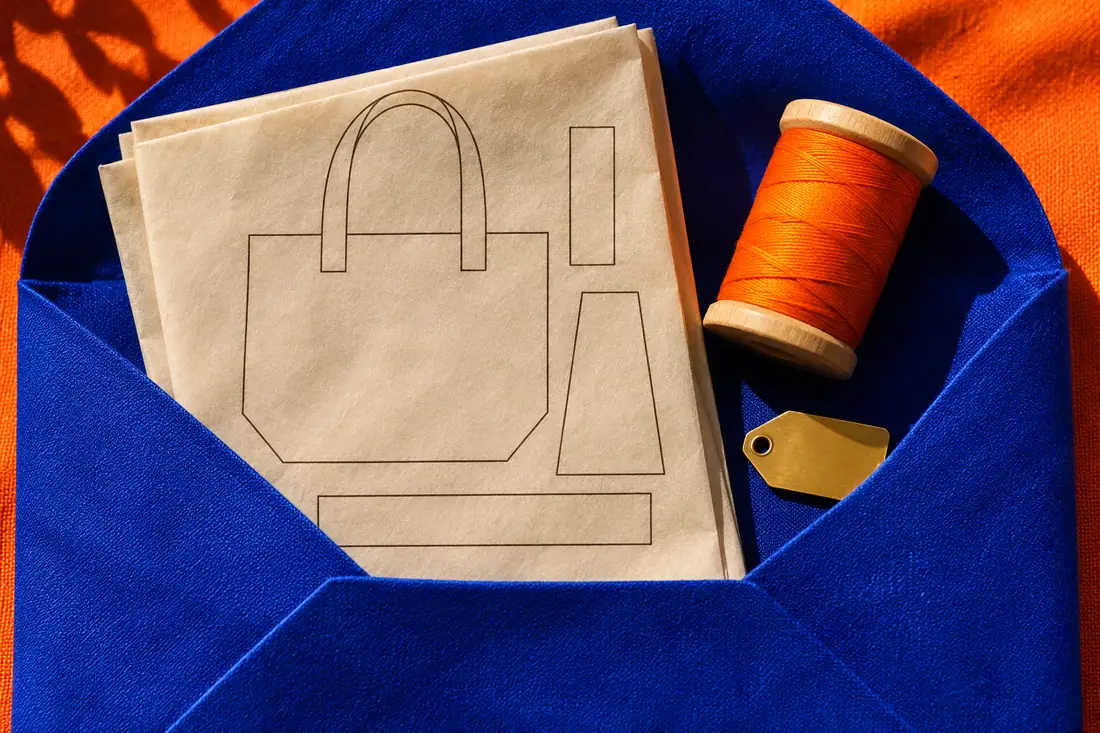


Keep an unrelated offer out of the scheduled draft until its audience is established.
Place the supplier deal in a separate brief
Before including the machine deal, Maren needs to establish who wants equipment offers and whether this subscription includes them. She leaves it off Friday's brief while the fabric guide is checked against the downloaded pattern.
The Thimblefern invitation, and what to ask before adding to it
A promise Maren can write to
- Get the free tote pattern now.
- Receive one sewing tip each Friday.
- The form mentions occasional paid pattern offers.
Before adding a campaign
- Did this person ask for this kind of message?
- Have they received the pattern this tip refers to?
- Does the new frequency match what the form said?
What will this email help someone do?
Maren writes the email's job beside the signup promise: "Help a new tote-pattern subscriber choose fabric before cutting." Reading the fabric guide is the next action. The jacket sale would ask that person to start a different project before this one is underway.
Reading the guide is this email's main action. A repeated link below the advice can lead to the same page; the unsubscribe link still belongs in the footer. The social-follow request stays on Maren's whiteboard for a different message.
A digest can invite readers to browse a selection. If that's the subscription, give the selection a clear purpose; Maren's Friday promise is one sewing tip.
Maren saves the founder story for a later introduction and moves the jacket sale to its own brief. Friday's draft now has room to explain the fabric choice without asking the subscriber to choose between unrelated links.
The welcome-sequence lesson spreads those early tasks across several messages. Use it to decide which task belongs in the next send.
Put the audience exclusions in the brief
The brief now needs a recipient list the sending owner can select. Maren turns the signup wording and pattern-delivery record into two lines:
Include: new tote-pattern subscribers who asked for sewing tips and received the pattern. Exclude: unsubscribed contacts and anyone without this subscription.
The audience selection must match these lines before the message is scheduled.
The sending owner can compare selected recipients with those lines and review applicable commercial-email requirements, including the unsubscribe mechanism. Their name and review status belong on the brief.
The sending calendar may reveal an overlap: the jacket launch could already include these subscribers. Maren and the sending owner need to settle which message they receive before Friday's tip is scheduled.
Open the guide and compare it with the pattern's material list. If the email promises side-by-side fabric photos, locate those photos in the guide. A page title alone won't establish that the promised help is there.
A matching destination title helps the subscriber recognize the guide after clicking. Landing-page copywriting develops that connection between a message and the page it opens.
Let the inbox and the message make the same promise
The sender name says who's talking, and the subject gives a reason to look. The preview adds context, then the opening starts to pay off those lines. Read them together in an inbox preview, where Maren's studio name sits beside the tote subject.
Mailchimp's newsletter style guide recommends defining the purpose and audience, with a clear next step. In this draft, the subject needs to identify the tote project and the body needs to lead to the fabric guide.
Compare "We have exciting news" with "A fabric tip for your first tote." The second names the project Tuesday's subscriber started. Pair it with "What to choose before you cut the pattern" in the preview, then begin the body with the fabric choice itself.
You can work on that pair in email subject lines. Preview it next to the opening, then check whether someone can tell which project the email concerns before scrolling.
A complete email with a modest job
For this example, the pattern calls for medium-weight woven cotton and the guide contains the comparisons promised in the draft.
From: Thimblefern Studio
Subject: A fabric tip for your first tote
Preview: What to choose before you cut the pattern.A stretchy fabric can make your first tote harder than it needs to be.
For the pattern you downloaded, start with a medium-weight woven cotton. It holds its shape while you cut, and the edges are easier to line up at the machine.
We've put three fabrics side by side in the guide, including one to save for a later project. If you're shopping from your own fabric drawer, the photos will help you compare what you have.
Read the fabric-selection guide
Next Friday: how to cut matching pieces without chasing the paper around the table.
Maren at Thimblefern
The handoff needs verified business footer details. Next Friday's cutting lesson also needs a place on Maren's schedule, since the sign-off makes another promise she'll have to keep.
Sound like a person who knows why they are writing
"Shopping from your own fabric drawer" gives the guidance a place in the subscriber's day. It earns its place in the edit; "Dear valued sewing enthusiast" could address anyone on any sewing list.
If Maren adds "Reply if you're unsure which fabric to pick," check who will read those replies. Name the person covering the inbox in the sending brief before leaving that invitation in the copy.
Tuesday's download supports referring to "the pattern you downloaded." It doesn't tell Maren how many years the subscriber has sewn. Replace a guessed greeting such as "As a new sewer" with a reference to the tote project they actually chose.
Read the draft as someone opening the fabric drawer with the pattern alongside it. The guidance needs to be easy to follow at that moment. The persuasive email body copy lesson develops the middle of the message.
The writer owns the sending handoff
The platform owner needs the audience selection and complete test message to verify sender setup against the provider's current requirements and confirm that suppressed contacts stay excluded.
Send a preview to a real inbox and open it on a narrow screen. Test the link with images blocked too, so you can see whether the action remains understandable without them.
Hand off the whole message
Specify
List the audience and exclusions, then the sender, subject, preview, body, link and footer.
Preview
Send yourself a real test on a narrow screen with images blocked, and click through to the page.
Verify
Confirm who's eligible, that unsubscribe works, who reads replies and who owns sender setup.
Learn
Read clicks on the intended action alongside complaints, unsubscribes and the replies that show understanding.
For the fabric-guide email, count visits to the guide as the main response. Keep them separate from project starts: a click doesn't establish that someone cut fabric. If replies ask which fabric in the photos to avoid, take that question back to the comparison before the next send.
For checkout reminders, use the triggers and stop rules in abandoned-cart emails, since an unfinished purchase isn't always a request to be persuaded.
Match a draft to the signup promise
For your next send, put the signup promise beside the proposed action. The Email library can help with the part of the message you're drafting. Read the inbox preview through to the destination as the person who accepted that promise.
Maren opens Friday's test message and follows "Read the fabric-selection guide," with the tote pattern's material list beside it. She finds the fabric marked for a later project and checks that the side-by-side comparison explains why it should stay in the drawer for this tote.
Read next
Lesson 1 of 7 in Email
Sources & further reading
- CAN-SPAM Act: A Compliance Guide for Business
- Writing Email Newsletters
- Email sender guidelines
- REI Closing its Doors on Black Friday, Invites Nation to #OptOutside