Advertising
Ad Copywriting
Write an ad around one credible reason to act. Start with the reader's situation and what they already know, then pair the words with creative that supports the same idea. Choose a next step the destination delivers, and judge the response by its value beyond the click.
By the end of this lesson
Write a focused ad brief and adapt its central message to a feed ad and a search ad without breaking the promise.
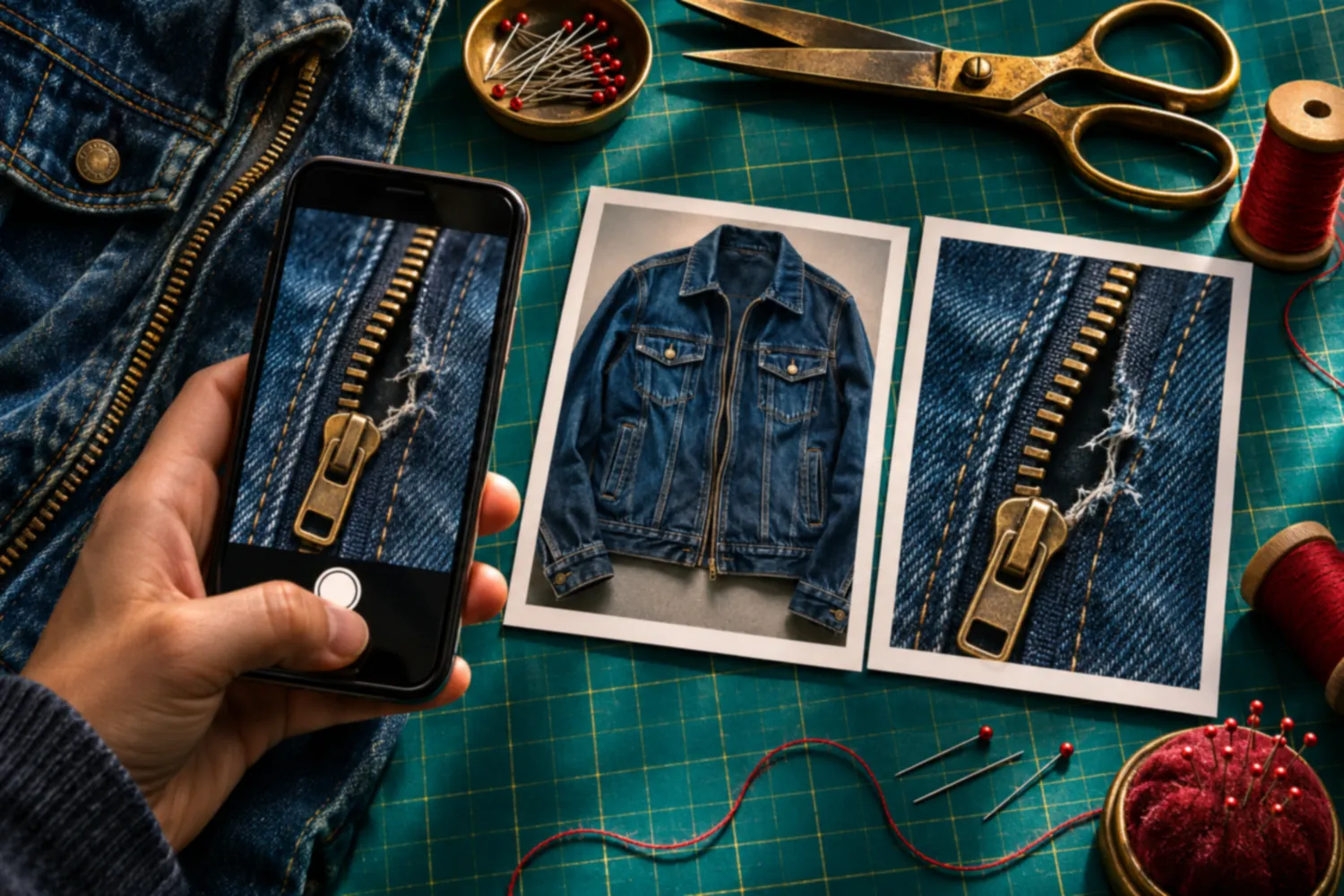
At the workshop desk, Cyprian sets a whole-jacket photo beside a close-up of its broken zipper. His draft ad says "Send a photo," though the workshop needs both views to assess a replacement. Zipplewick Repairs, its operating details and this worked example are invented.
The two photos give Cyprian a concrete first step to advertise: an assessment before mailing the jacket. You'll follow that offer through a feed ad and a search ad, adapting the opening to what each reader already knows.
Start with the attention you are buying
Cyprian starts with the search "mail-in zipper repair." You can answer that directly with "Mail-In Zipper Repairs," then explain the assessment. The searcher has named the topic, so explain what happens after they submit photos.
In a feed, someone may be looking at a friend's post when the jacket appears. Show the broken zipper on a garment someone could want to keep. Try "Keep the jacket: start with a zipper assessment," with enough context to make sense before anyone expands the text.
One service, different entry points
Search: an expressed need
- Opening: Mail-In Zipper Repairs
- Evidence: Explain the assessment and repair process.
- Next step: Request a photo assessment.
Feed: an interrupted activity
- Opening: Keep the jacket. Start with a zipper assessment.
- Creative: Show the damaged zipper on the jacket.
- Next step: See how photo assessments work.
You don't know that everyone seeing the feed ad has a broken jacket. Aim the message at the relevant situation and let other people pass. Ask for the placement and audience assumptions in the brief; use customer awareness to decide how much explanation that situation needs.
Compare the two openings before adding more copy. "Mail-In Zipper Repairs" answers the named search. "Keep the jacket" needs the damaged zipper in view to explain the offer; without it, the line could advertise storage or clothing care.
Give the ad one organizing idea
Cyprian writes this objective on the brief: "Help someone investigate repairing a jacket they want to keep." When the workshop asks to add curtain alterations, he keeps that service for another ad. You can use the objective to decide which requests belong in this version.
Keep details that help the reader prepare, including the two-photo requirement. "Send photos before mailing" explains the commitment at this stage. Cyprian saves the workshop's history for the destination, where there's room to develop it.
If the team disagrees about the lead service, use the messaging hierarchy to settle its priority. Write the agreed service above the draft: jacket zipper assessment. That gives the person reviewing the creative a reason to question a curtain photo or a general tailoring line.
Read the draft to someone who hasn't seen the brief, then ask what they would send and expect in return. Keep their exact answer beside the action label. If they expect a firm repair price from the photos, flag "assessment" for explanation in the next pass.
Write the picture and the words together
The opening poster's dry bag suggests weather protection. Used with Zipplewick's copy, it would leave the jacket-repair offer unexplained.
Put the whole jacket beside the close-up in the creative brief. The close-up shows the damage; the wider view makes the garment identifiable. Try the line "See whether your jacket's zipper can be replaced," with accompanying text explaining that assessment comes before mailing.
A dramatic before-and-after could make replacement look certain. Compare that impression with "See whether your jacket's zipper can be replaced." If the service still needs to assess the damage, a close-up of the broken zipper keeps the image at the same stage as the words.
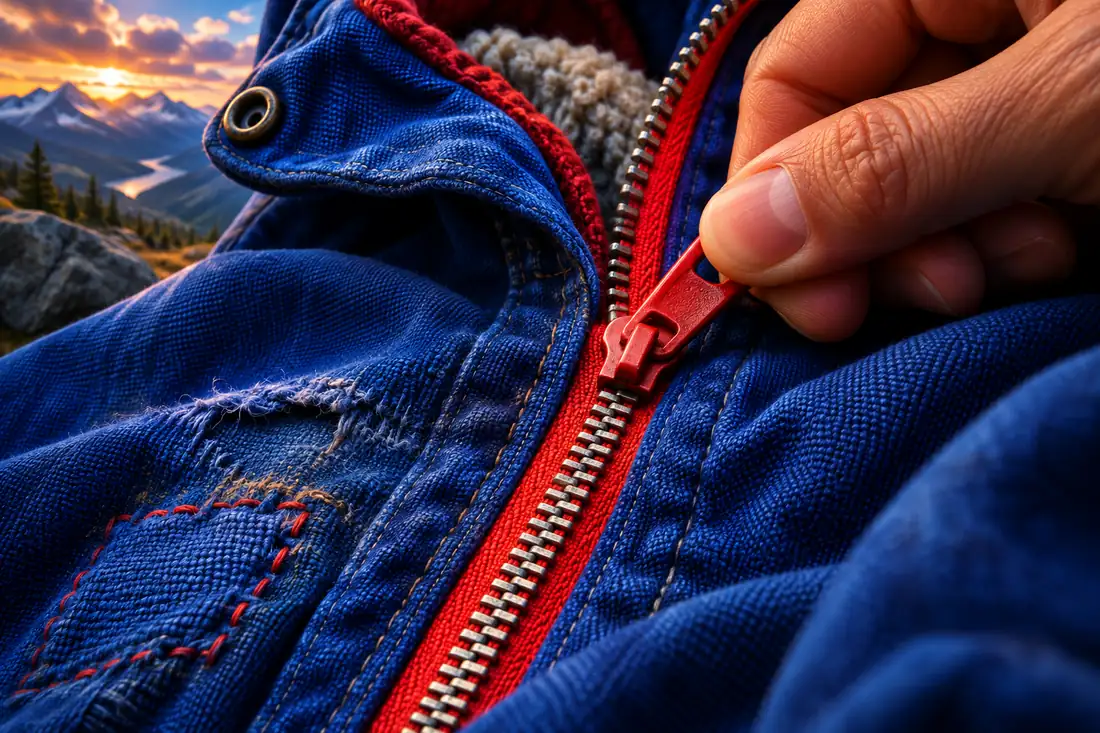



If the image needs a new explanation, revise the draft beside it.
The picture changes what the line must explain
Cover the words and show each image to a colleague. Ask what service they think it advertises. Keep their first answer with the creative brief; a parcel could suggest delivery or returns.
Record what someone sees before showing them the proposed line.
Google's ABCD video guidance recommends a focused message and coordination between audio and text. On Cyprian's brief, put the proposed line beside the jacket image and label the intended action: upload two photos for assessment before mailing.
For Cyprian's still-image exercise, inspect the colleague's answer about the parcel. If they expect to mail a garment immediately, make the photo-assessment step visible or change the image. Keep the revised pairing in the brief so the next reviewer sees the version you checked.
Shorten the route to understanding
The workshop's draft leads with a broad introduction to its services. Cyprian replaces that introduction with the two photos the reader needs to prepare. Check that your shorter version still explains what the business will do with the submission.
Replace the introduction with the offer
A crowded introduction
Discover our innovative clothing-care services, sustainable mission, expert craftsmanship, and convenient solutions. Explore the range and join our community today.
An assessment to act on
Keep wearing the jacket you like. Send a whole-jacket photo and a zipper close-up so Zipplewick Repairs can assess whether replacement is possible before you mail it.
The promised first step is an assessment of whether replacement looks possible; firm pricing may require inspection.
"Get your repair quote from two photos" would promise a price at this first step. Ask the workshop to confirm what its assessment reply contains, then explain that output beside the action. Carry the same explanation into the form confirmation so the offer stays consistent after uploading.
The FTC's US small-business advertising guidance covers express and implied claims, including the impression created by pictures. Review the image and words together, with evidence for what they convey, before running the ad. A cautious sentence beside a guaranteed-looking repair still needs that review.
Fit the copy to the placement
Cyprian now fits the search-ad fields. Google's responsive search guidance allows 30 characters per headline and 90 per description, with assets appearing in different orders. Check each proposed asset on its own before previewing combinations.
Cyprian supplies two headline assets, "Mail-In Zipper Repairs" and "Request a Photo Assessment." His description reads, "Send a whole-jacket photo and a zipper close-up. Check assessment steps before mailing."
Beside the search assets, Cyprian places the full feed draft with a photo of the jacket's damaged zipper:
Headline: Keep the jacket.
Text: See whether its zipper can be replaced. Send a whole-jacket photo and a zipper close-up. Zipplewick Repairs will assess the damage before you mail it.
Button: Start your zipper assessment
Writing inside the container
Do
- Read each headline in isolation.
- Preview a combination with the shortest description.
- Assign someone to check the live placement after launch.
Avoid
- Leave an essential condition in a field that may disappear.
- Approve the desktop preview as the only version.
- Leave the campaign owner guessing which wording was approved.
Keep "before mailing" with the assessment, so its meaning survives changes in the displayed combination. If a condition must appear, confirm the platform's controls with whoever runs the campaign. Inspect the campaign preview before approving the assets.
For feed placements, work through the Facebook and Instagram copy workflow. Inspect the version someone will encounter on a phone. The most carefully written instruction won't help if a crop covers it.
Carry the promise across the click
Open the destination beside the ad. Our reader has agreed to investigate this zipper. The page should show the assessment instructions where they can find them, with an explanation of what happens after submitting the photos.
Cyprian puts "Start your zipper assessment" above the form. Below it, he writes the instruction the service needs to confirm:
Upload a photo of the whole jacket and a close-up of the damage. We'll assess whether a replacement is possible before you mail it.
On the test form, the second upload replaces the first. Cyprian shows the form owner both attempts and asks for separate fields labelled "Whole jacket" and "Zipper close-up," matching the instructions.
They check the revised fields together. Cyprian uploads the whole-jacket view, adds the close-up and submits; both thumbnails remain on the confirmation. The form can now accept what the ads request.
Use landing page copywriting to develop the details that follow. Show mailing costs and limitations when they're relevant to the next decision. The ad can stay focused because the page gives its promise room to be examined.
What would a good response mean?
For the repair workshop, define the response you want before the ad runs: did the person submit the required photos, and could the workshop assess the jacket?
Cyprian proposes completed, suitable assessment requests as an early measure, with accepted paid repairs as a later one. A photo of a zippered bag could add a submission the jacket-repair workshop can't use. Record that distinction before evaluating response totals.
When comparing openings, record what else changes. Changing the audience and destination too prevents you from isolating the effect of the wording. Use the direct-response advertising plan to connect suitable responses to costs.
You can also examine why requests were unsuitable. If people repeatedly upload a close-up alone, return to the instruction in the ad and form. That observation gives you a specific revision to investigate without inventing a story about the audience's attention span.
Compare a feed ad with a search ad
Put "Keep the jacket" beside "Mail-In Zipper Repairs" and compare what each opening has to establish. The feed version needs the damaged zipper in view to explain why someone might keep reading. The search version can move straight from the named service to the assessment process.
Write both versions for your own offer, using the same assessment requirement and destination. Cover the feed image and check what meaning disappears; read each search asset alone and check what survives. Use the brief below and the Advertising lessons to review your choices.
Questions to attach to the working brief
Reader situation
- Which jacket types can the workshop assess?
Central idea
- Does the assessment involve a charge? Confirm before describing it.
Support
- Who can supply images of work the service is allowed to show?
Action
- What should the person receive after uploading?
Destination
- Who owns a form problem discovered during the ad review?
Read each version through to the destination. Can someone tell what to send, what the workshop will assess and why they should wait before mailing? If an answer depends on an image or field that may disappear, revise that version before approving it.
Cyprian keeps the jacket and its damaged zipper together in the feed creative; the search ad leads with "Mail-In Zipper Repairs." Both ask for the same two photos before mailing, giving readers who arrive with different knowledge a clear route to the same assessment.
Read next

Lesson 1 of 6 in Advertising
Sources & further reading
- About responsive search ads
- About the ABCDs of effective video ads
- Advertising FAQ's: A Guide for Small Business
- DollarShaveClub.com CEO Sees A Fifty-Fifty Future In Paid Media, Viral Video